What to Buy in Korea (2026): Top 5 Items Visitors Actually Buy
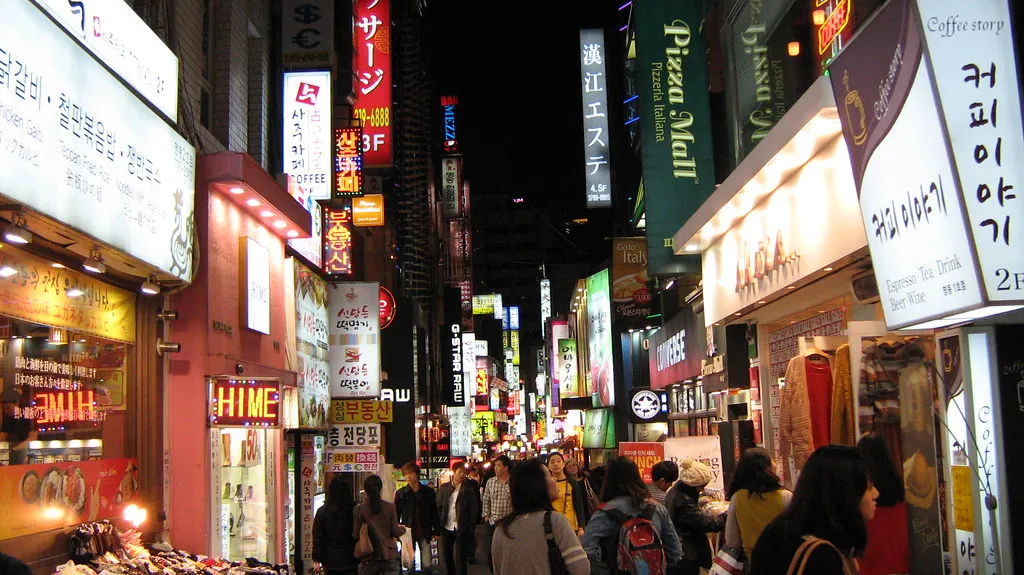
Quick answer: If you’re wondering what to buy in Korea, the government’s 2025 survey of 16,110 departing visitors shows what tourists actually buy: perfume and cosmetics (71.3% of shoppers), food (56.2%), clothing (49.7%), shoes (16.7%) and jewelry or accessories (13.3%). Cosmetics also take the biggest slice of the money, 33.9% of shopping spend. Early 2026 survey results show the same top five.
This guide is built on the International Visitor Survey (외래관광객조사) from Korea’s Ministry of Culture, Sports and Tourism, run by the Korea Culture & Tourism Institute. Retail data from Olive Young and GS25 fills in the actual products. You get the Korean names to show staff or type into a store app.
What do tourists actually buy in Korea?
Cosmetics, food and clothing, by a wide margin. The 2025 survey asked visitors leaving from six airports and four seaports what they bought, between January and December 2025. The answers below are from visitors who spent money on shopping, and people could pick more than one item.
| Rank | Item | Bought it | Share of shopping spend | Where to find it |
|---|---|---|---|---|
| 1 | Perfume and cosmetics (향수·화장품) | 71.3% | 33.9% | Olive Young and other cosmetics shops, duty-free shops |
| 2 | Food (식료품) | 56.2% | 19.0% | Supermarkets (대형마트), convenience stores (편의점), markets |
| 3 | Clothing (의류) | 49.7% | 20.2% | Road shops, shopping malls, department stores |
| 4 | Shoes (신발류) | 16.7% | 4.6% | Shopping malls, road shops |
| 5 | Jewelry and accessories (보석·액세서리) | 13.3% | 3.7% | Road shops, markets, department stores |
| 6= | K-pop and K-drama star goods (한류스타 관련 상품) | 11.2% | 3.2% | — |
| 6= | Bags (가방류) | 11.2% | 3.6% | — |
| 8 | Ginseng and herbal medicine (인삼·한약재) | 10.4% | 3.8% | — |
| 10 | Traditional crafts (전통민예품) | 8.0% | 2.1% | — |
Tobacco (8.6%) was ninth. The survey asks about shopping places separately: road shops (로드샵, street-level stores) led at 50.9%, then shopping malls (39.1%), department stores (34.5%), downtown duty-free shops (26.6%), supermarkets (23.6%), convenience stores (21.1%), traditional markets (20.5%) and airport duty-free (12.7%).
What’s changing: cosmetics rose from 61.6% in 2023 to 68.3% in 2024 and 71.3% in 2025, and K-pop star goods rose from 9.2% to 11.2%. Food, clothing and ginseng dipped. In the preliminary results for April–June 2026, cosmetics reached 75.3%, with food (56.9%), clothing (49.1%), shoes (16.1%) and accessories (13.5%) behind it.
Do American, British, Canadian and Australian visitors buy differently?
Yes. Cosmetics still come first, but clothing is close behind, and about one in five buys traditional crafts. Here’s the 2025 survey by country of residence.
| Bought it | US | UK | Canada | Australia | All visitors |
|---|---|---|---|---|---|
| Cosmetics (화장품) | 57.2% | 56.2% | 65.5% | 58.2% | 71.3% |
| Clothing (의류) | 52.1% | 48.9% | 60.0% | 57.4% | 49.7% |
| Food (식료품) | 45.9% | 40.2% | 34.6% | 40.7% | 56.2% |
| Jewelry and accessories | 25.7% | 24.4% | 23.1% | 23.9% | 13.3% |
| Traditional crafts (전통민예품) | 22.9% | 20.3% | 21.6% | 20.3% | 8.0% |
| Shoes (신발류) | 14.6% | 14.9% | 10.5% | 18.9% | 16.7% |
Clothing takes about a quarter of shopping spend for these visitors: 23.1% (US), 24.1% (UK), 26.7% (Canada) and 26.0% (Australia). Food matters far more to visitors from Taiwan (76.0%) and Japan (72.5%).
Other patterns: women were far more likely to buy cosmetics (78.7%) than men (56.7%). Visitors aged 60 and over put food first (68.1%), and 15–19-year-olds bought clothing (69.1%) and K-pop goods (23.5%) more than any other age group.
1. Cosmetics and perfume (향수·화장품): what to buy and where
Skincare is the core of it. The health and beauty chain Olive Young (올리브영) says foreign shoppers buy basic skincare (기초화장품) first, then makeup (색조화장품), then hair care (헤어케어).
Olive Young’s foreign sales in its Korean stores passed ₩1 trillion in January–August 2026, from customers of 192 countries. Its 31 August 2026 release says foreign shoppers bought six products on average, and 35% spent ₩100,000 or more in one payment. What’s growing, according to the release:
- Dermatological skincare (K더모 스킨케어): foreign sales up about 78% in January–August 2026.
- Scalp care: hair tonics and ampoules (헤어토닉·앰플), where foreign shoppers make up 28% of sales.
- Hand cream (핸드크림): foreign tourists account for 40% of hand-care sales; perfumed hand creams are the popular type.
- Inner beauty (이너뷰티): products like collagen, slimming jelly and pumpkin tea, up 64%.
Who it suits: anyone with a skincare routine, and anyone buying many small gifts. Hand creams are small and light to pack.
A Korea Tourism Organization analysis of foreign visitors’ card payments (data through September 2025) found cosmetics up 35% in 2025 and pharmacies up 67%.
2. Food (식료품): snacks, ramyeon and seaweed
Packaged snacks and instant noodles are what visitors carry out of supermarkets and convenience stores. GS25’s release of 21 July 2026 lists what foreign customers buy most at its stores: banana milk (바나나우유), Greek yogurt (그릭요거트), ice cups (얼음컵), seasoned boiled eggs (감동란), Sesame Ramen (참깨라면), Buldak spicy noodles (불닭볶음면) and honey butter almonds (허니버터아몬드). The snacks and ramyeon on that list travel well; the dairy and eggs are for eating during your trip.
Who it suits: office gifts and anyone who wants a taste of Korea at home. Snacks are light; jarred sauces and kimchi need the packing rules below. Check your home country’s food import rules before you stock up.
3. Clothing (의류): the second-biggest spend
Clothing is bought by fewer people than food, but it takes more money: 20.2% of shopping spend versus 19.0% for food. In the Korea Tourism Organization’s card data, the number of fashion purchases by foreign visitors rose 23.4% in January–September 2025. Underwear (+59.1%), sporting goods (+33.4%), accessories (+33.0%) and sportswear (+32.8%) led the growth.
The survey’s shopping-place results point to where this happens: road shops (50.9%), shopping malls (39.1%) and department stores (34.5%) are the top three.
Who it suits: visitors from Canada and Australia, where about six in ten bought clothing, and teenagers (69.1%). Bigger clothing buys easily pass the ₩15,000 tax refund minimum, so carry your passport.
4–5. Shoes (신발류) and jewelry and accessories (보석·액세서리)
Shoes and accessories round out the top five, but each takes under 5% of spend. They’re add-ons, not the main haul.
Shoes
16.7% of shoppers bought shoes in 2025. Visitors from Thailand (37.6%), Mongolia (34.6%) and Russia (32.3%) bought them most. Of the four English-speaking markets above, Australians led at 18.9%.
Jewelry and accessories
13.3% bought jewelry or accessories, but that rises to about one in four for US, UK, Canadian and Australian visitors. Accessory purchases by foreign visitors grew 33.0% in January–September 2025 (Korea Tourism Organization card data).
Who it suits: small, light gifts. If you want something Korean-made rather than generic, the traditional crafts category (전통민예품) is a close cousin: about one in five Western visitors bought crafts.
How do you get the tax back on souvenirs?
Spend ₩15,000 or more in one store and you can get the VAT back, if you’re staying in Korea for less than six months. At stores with immediate tax refund, purchases under ₩1,000,000 each, up to ₩5,000,000 per trip, are rung up without the tax.
- Look for a “Tax Free” or “Tax Refund” sign at the entrance or till.
- Combine small purchases into one receipt at one store to reach ₩15,000.
- Show your passport at the till.
- Take the goods out of Korea within three months of buying them.
GS25 says it runs immediate tax refund at stores with many foreign customers. For limits, airport refunds and what changed in 2024, see our Korea tax refund guide.
How do you get cosmetics, kimchi and sauces home?
Pack anything liquid or gel-like in your checked bag. Incheon Airport treats kimchi and gochujang the same as liquid cosmetics.
| Item | Carry-on | Checked bag |
|---|---|---|
| Liquid, spray or gel cosmetics, toiletries | Only containers of 100 ml or less, in one 1-liter clear zip bag per person | Allowed (non-flammable sprays: up to 500 ml each, 2 L in total) |
| Kimchi (김치), gochujang (고추장) and other liquid or gel foods | Same 100 ml / 1-liter rule | Allowed, with no quantity limit |
| Liquids bought at duty-free shops | Any size, if sealed in the duty-free liquids bag and unopened until you board your final flight | — |
Three other rules on Incheon Airport’s list matter for shoppers:
- Antiques: cultural property needs an export permit or a certificate that it isn’t cultural property (비문화재 확인증). Ask the seller before you buy anything old.
- Fresh produce and plants: restricted, and need a plant inspection certificate.
- Cash: more than US$10,000 in cash or equivalent is on the restricted list, so check Korea Customs’ rules before you carry that much out.
Your home country’s rules matter too. For example, Canada lets returning residents bring in CAN$800 of goods duty-free after 48 hours away (CAN$200 after 24 hours, excluding alcohol and tobacco), and requires you to declare all food. Check your own customs agency before a big shop.
FAQ
What is the most popular souvenir from Korea?
Cosmetics. In the 2025 International Visitor Survey, 71.3% of visitors who shopped bought perfume or cosmetics, and cosmetics took 33.9% of shopping spend.
Where do tourists shop most in Korea?
Road shops (street-level stores such as cosmetics chains) were used by 50.9% of shoppers in 2025, followed by shopping malls (39.1%) and department stores (34.5%). In April–June 2026, road shops rose to 60.7%.
Is red ginseng a common souvenir?
Ginseng and herbal medicine (인삼·한약재) ranked eighth in 2025, bought by 10.4% of shoppers. It’s far more popular with visitors from Vietnam (35.2%) and group tours (30.2%) than with Western visitors.
Can I take kimchi on the plane from Korea?
Only in containers of 100 ml or less inside your 1-liter liquids bag. Larger amounts go in checked baggage, which Incheon Airport says has no quantity limit for kimchi and gochujang.
Can I get a tax refund at convenience stores?
Some. GS25 says it offers immediate tax refund at stores popular with foreign visitors. The ₩15,000 minimum applies to one purchase at one store, so small snack runs won’t qualify.
Related guides
 Shopping
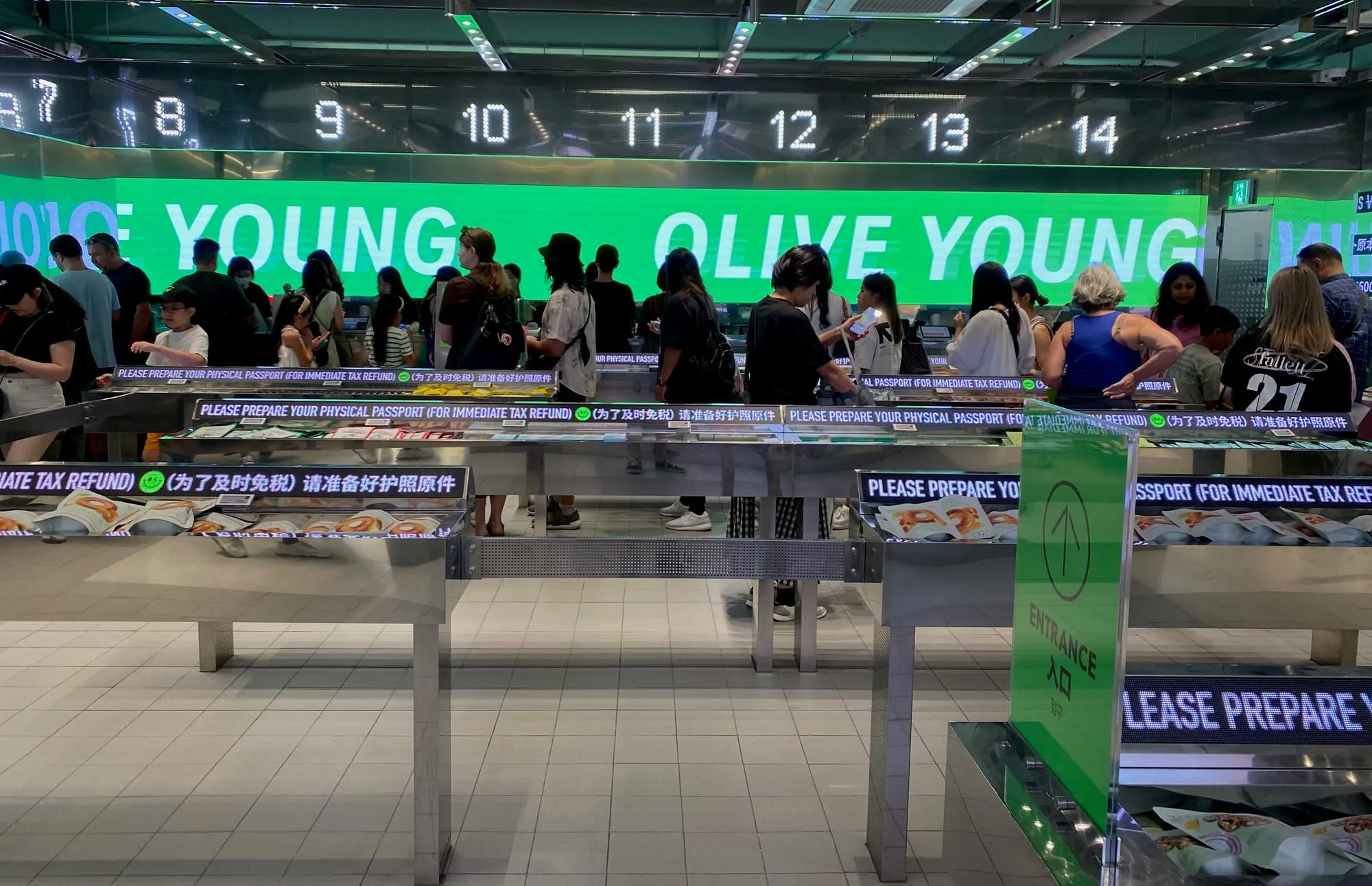
Olive Young Best Sellers (2026): Korea's Ranking and Awards Explained
Olive Young best sellers, from Korea's own data: the 2025 Awards category winners, what foreign shoppers buy, and how to read the live ranking.
 Shopping
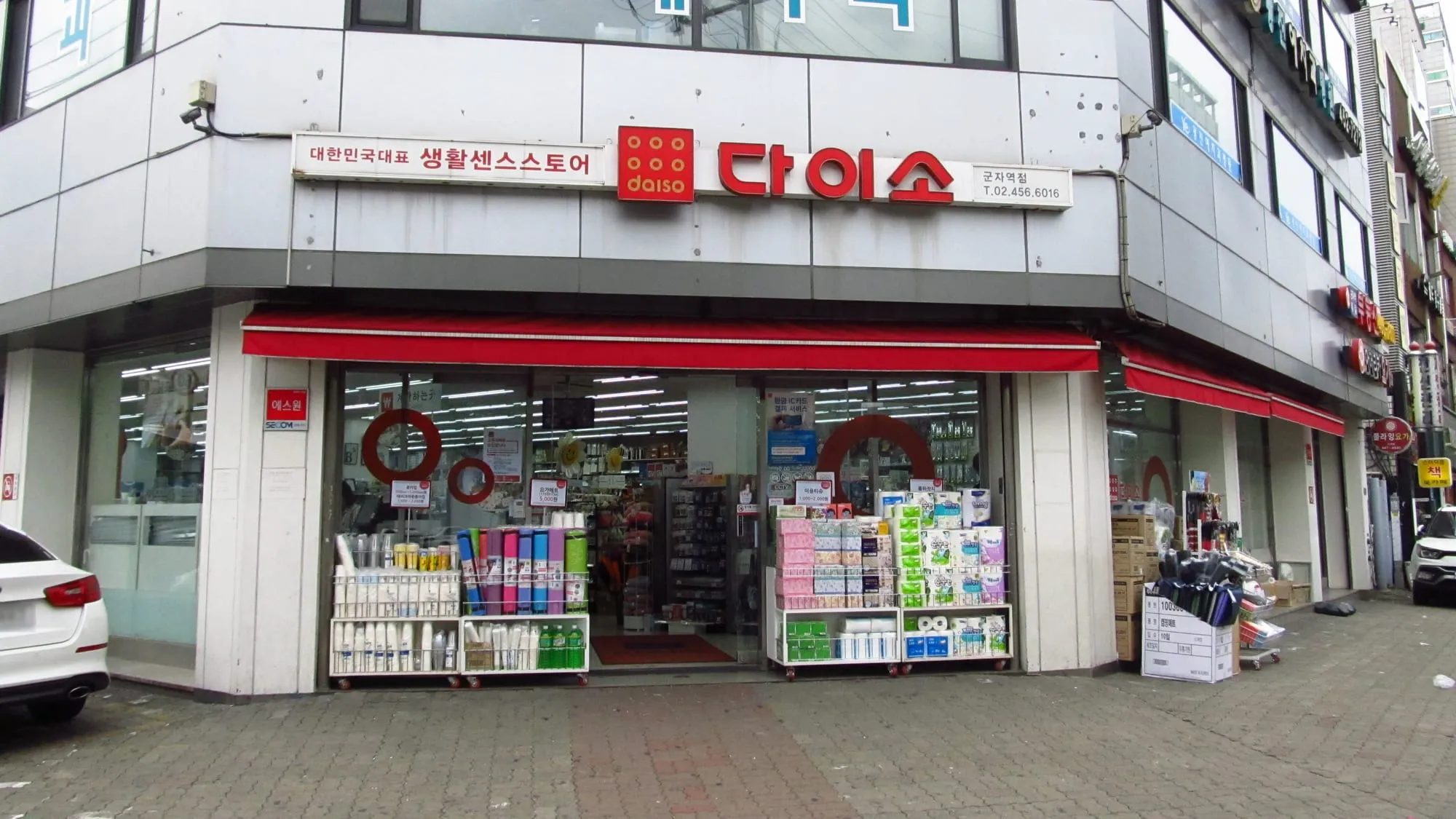
Daiso Korea: What to Buy and Tax-Free Rules (2026)
Daiso Korea sells most items for ₩1,000–5,000. Buy skincare, snacks and travel gear; get the tax back when one receipt hits ₩15,000 at a tax-refund branch.
 Shopping
Korean Convenience Store Guide (2026): What to Buy, How to Pay, ATMs
Korean convenience store basics: pay with T-money, Alipay or won, buy 11 approved medicines at 24-hour stores, refund T-money, and find cash or exchange.
Sources
- Ministry of Culture, Sports and Tourism / Korea Culture & Tourism Institute — 2025 International Visitor Survey, final report (Korean, posted 26 May 2026)
- Korea Tourism Knowledge & Information System — 2026 International Visitor Survey, Q2 preliminary results (Korean, 28 Jul 2026)
- CJ Newsroom — Olive Young foreign sales pass ₩1 trillion three months earlier (Korean, 31 Aug 2026)
- GS Retail — GS25 foreign sales at coastal stores, top items for foreign customers (Korean, 21 Jul 2026)
- Korea Tourism Organization — K-shopping paradigm shift: foreign visitors' card payments, 2018 to Sep 2025 (Korean press release, 16 Dec 2025)
- VISITKOREA — Comprehensive Tax Refund Guide (updated 20 Oct 2025)
- VISITKOREA — Duty Free & Tax Refunds (per-receipt minimum, trip limit, Tax Refund signs)
- Incheon International Airport — Restricted items: liquids, gel-type foods, export-restricted goods (Korean)
- Canada Border Services Agency — What you must declare and personal exemptions