Korea ATMs That Take Foreign Cards: Fees and Exchange Tips (2026)
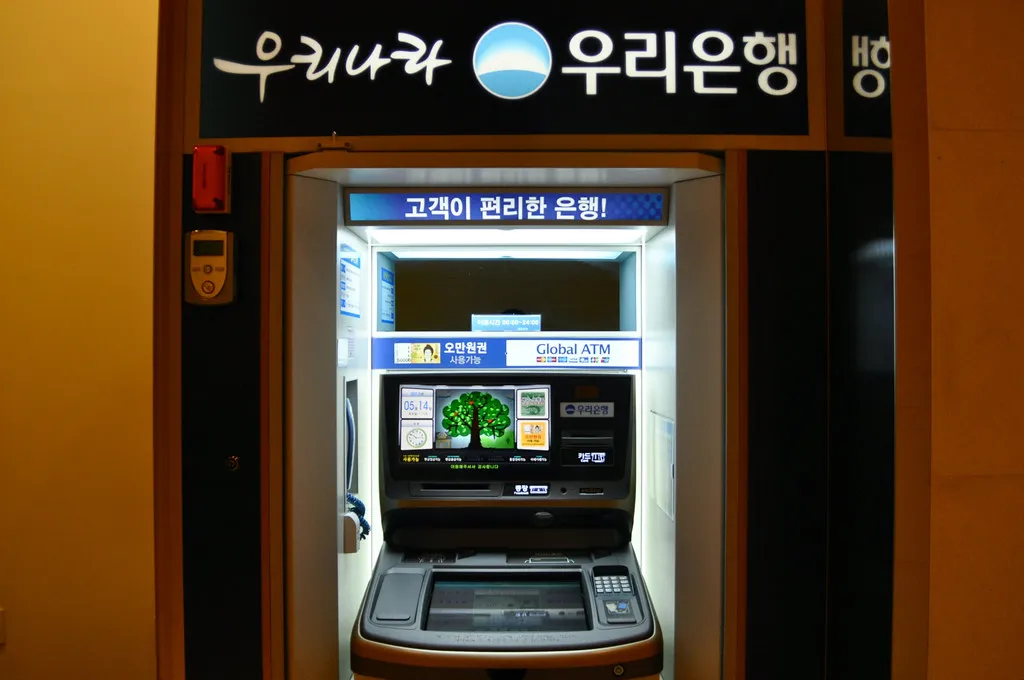
Quick answer: To use an ATM in Korea with a foreign card, look for a machine marked Global ATM that shows your card’s network logo (Visa/PLUS or Mastercard/Cirrus/Maestro), usually at bank branches. Always choose to be charged in Korean won (KRW), not your home currency. Exchange cash only at banks or government-certified exchange booths, and carry less than you think: Seoul subway ticket machines now take foreign cards, and 183 Seoul bus routes don’t accept cash at all.
Credit cards are accepted at hotels, department stores and most shops in Korea, but you’ll still want some won for market stalls, small eateries and topping up a T-money card. This guide covers which ATMs take foreign cards, how to avoid the worst fees, where to exchange money, and the cash rules at the border.
Which ATMs in Korea accept foreign cards?
Use an ATM labeled Global ATM (글로벌 ATM) with your card network’s logo on it. Regular Korean ATMs often only work with Korean bank cards, so the label matters more than the bank name.
According to Seoul’s official tourism site (Visit Seoul), ATMs that take international cards are common and marked with a “Global” sign or the logos of the networks they accept. Most offer English, Chinese and Japanese menus. Many run until 23:00 and plenty are open 24 hours.
Hana Bank (하나은행), for example, says overseas cards carrying these logos can be used at its Global ATMs (its FAQ covers balance checks, so confirm withdrawals on the machine’s stickers):
- Visa and PLUS
- Mastercard, Maestro and Cirrus
- JCB
- UnionPay (은련)
Convenience store ATMs (편의점 ATM) are easy to find, but not every machine takes foreign cards, and Visit Seoul notes they often charge higher fees than bank ATMs. Use a bank branch’s Global ATM when you can, and keep convenience store machines as a backup.
Local tip from our editor: Korea has been removing ATMs as fewer people use cash. Banks had 24,711 ATMs nationwide at the end of June 2026, 15.7% fewer than at the end of 2022, and ATMs at GS25, CU and 7-Eleven have been shrinking too, down to about 28,800 stores. Don’t count on finding one on every block, and remember that many convenience store machines don’t take foreign cards. Take out what you need at the airport or when you pass a bank branch with a Global ATM.
How do you withdraw cash with a foreign card?
Find a Global ATM, choose the foreign card menu, and withdraw in won. The one decision that costs real money is the currency screen in step 5.
- Check the logos on the machine or the sticker beside it. Your card’s network (Visa/PLUS, Mastercard/Cirrus/Maestro, JCB or UnionPay) must be shown.
- Pick English (most Global ATMs also offer Chinese and Japanese) and the option for foreign or international cards.
- Insert your card and enter your PIN. If your PIN is longer than four digits, ask your bank before you travel whether it works abroad.
- Choose cash withdrawal and an amount in won. Check the screen for any fee or limit before you confirm.
- Decline conversion to your home currency. If the screen offers to charge you in dollars, pounds or another home currency, choose KRW. That offer is dynamic currency conversion (DCC), which adds its own fee and an extra currency conversion.
- Take your card, cash and receipt. Keep the receipt until the withdrawal shows up on your statement.
Korea’s own Financial Supervisory Service (금융감독원) warns Korean travelers that paying abroad in their home currency adds a 3–8% service fee on top of normal charges. The same trap works in reverse when you’re in Korea, so always choose won.
What fees will you pay?
Expect up to three charges: your bank’s foreign transaction or ATM fee, the Korean ATM operator’s fee, and a DCC markup if you accept it. You can avoid the third completely.
| Way to get won | What you pay | Good for | Watch out for |
|---|---|---|---|
| Bank Global ATM | Your bank’s fee + ATM fee shown on screen | Most withdrawals | Limit per withdrawal varies by machine |
| Convenience store ATM | Your bank’s fee + often a higher ATM fee | Late night, outside cities | Not every machine takes foreign cards |
| Bank counter exchange | Bank’s exchange margin | Exchanging cash you brought | Weekday hours (roughly 09:00–16:00) |
| Certified exchange booth | Booth’s exchange margin | Evenings and weekends in tourist areas | Avoid booths without a “Certified” sign |
| Airport bank counter | Bank’s exchange margin | Cash for your first day | Change only what you need right away |
To keep fees down, withdraw larger amounts less often instead of many small withdrawals, since the ATM fee is per transaction. A debit card from a bank that refunds ATM fees, or one that charges no foreign transaction fee, saves the most.
Where should you exchange money in Korea?
Exchange at a bank or a government-certified exchange booth, never on the street. Bring your passport.
- Banks: Most banks exchange currency, generally on weekdays from 09:00 to 16:00. Korea Post (우체국) banking runs until 16:30.
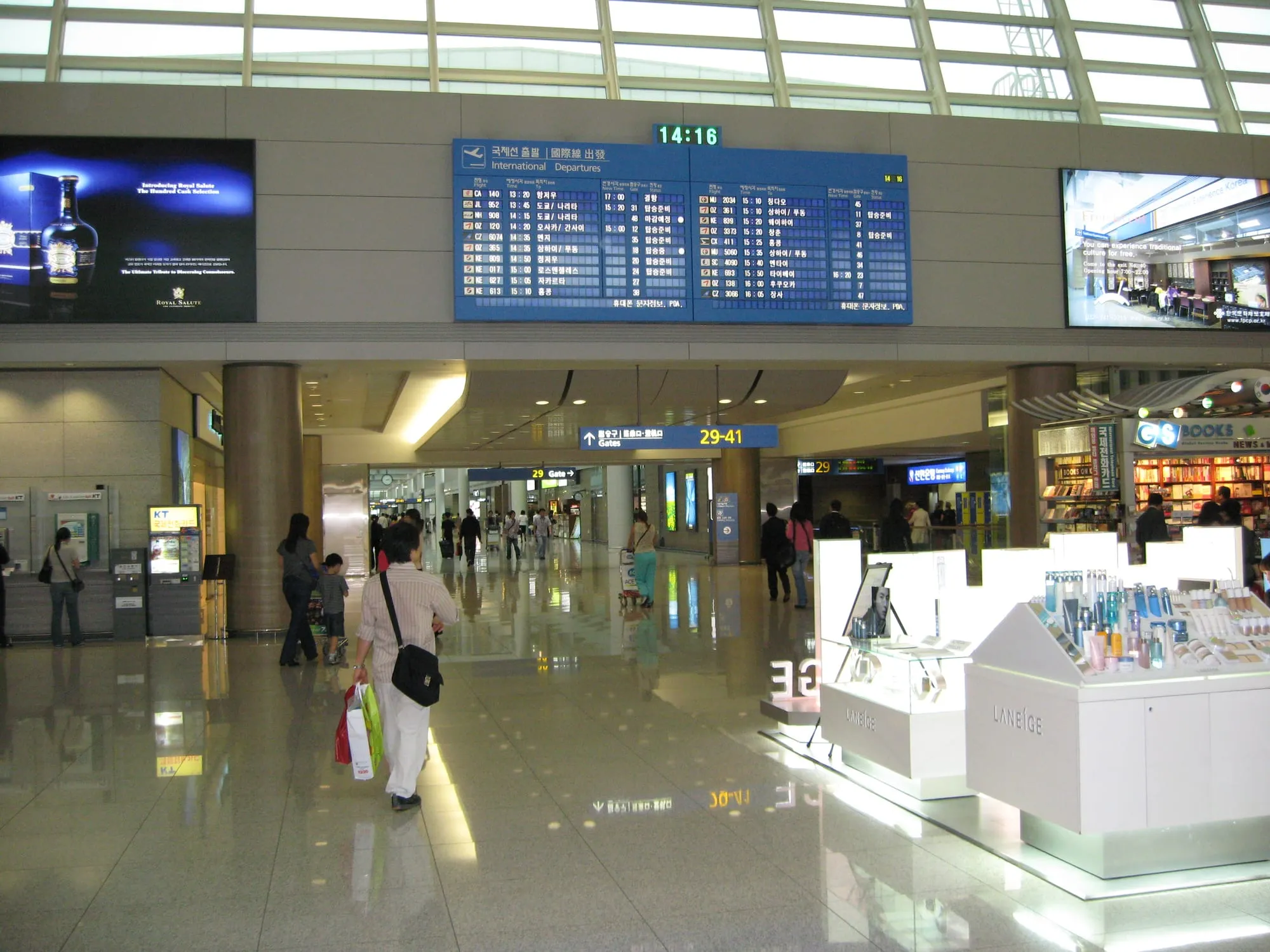
- Airports: At Incheon Airport, KB Kookmin (국민), Hana (하나) and Woori (우리) have branches in both Terminal 1 and Terminal 2. At Gimpo, Shinhan Bank (신한은행) is on the 1st floor of the domestic terminal, beside the arrivals gate.
- Certified exchange booths (환전소): These stay open outside bank hours in tourist areas. Look for a sign with the word “Certified” and currency symbols, and skip any booth without one.
ID rules: You can exchange up to the equivalent of ₩1,000,000 without ID. Above that, show your passport. Old-series banknotes from your home country may be refused at some counters.
Changing won back before you leave: As a non-resident, you can convert won back into foreign currency up to the amount shown on your exchange receipts (외국환매입증명서). Without receipts, the limit is the equivalent of US$10,000, and the bank records it in your passport. Keep every exchange receipt until you fly home.
How much cash do you actually need?
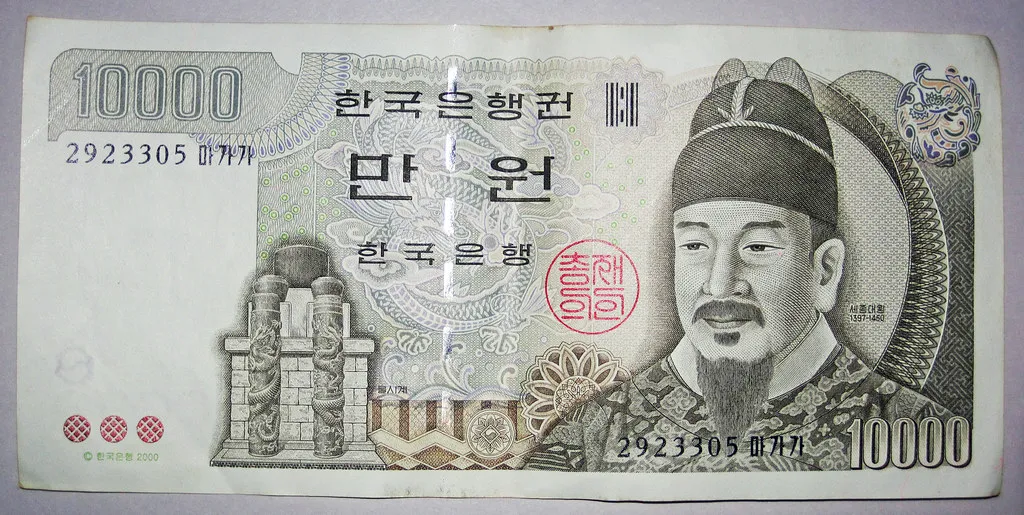
Not much: carry enough for small purchases and transit top-ups, and pay by card for the rest. Korean won comes in ₩1,000, ₩5,000, ₩10,000 and ₩50,000 notes and ₩10, ₩50, ₩100 and ₩500 coins.
Three things have reduced the need for cash:
- Subway tickets: Since 17 March 2026, 440 new ticket machines at 273 stations on Seoul Lines 1–8 accept Visa, Mastercard and other international cards for Climate Card short-term passes and single-journey tickets, with an average 3.7% fee.
- Cashless buses: Seoul lists 183 bus routes that don’t accept cash at all (list as of January 2026). Pay with a transit card instead.
- Tax refunds: If you claim a VAT refund at the airport, you can collect it in won or several other currencies. See our Korea tax refund guide.
Where you still need cash: topping up a physical T-money card at a convenience store or station (in ₩1,000 steps, ₩1,000 to ₩90,000 at a time), traditional market stalls, and some small restaurants. For which transit card to buy, see T-money vs the Climate Card.
Do you need to declare cash at Korean customs?
Only if you carry more than the equivalent of US$10,000. That limit counts everything together: foreign currency, Korean won, won-denominated cashier’s checks and traveler’s checks.
On arrival, tick the currency box (item 3) on the traveler’s customs declaration form, write the total and hand it to a customs officer, then keep the currency declaration certificate (외국환신고필증) you’re given; it can’t be issued once you’ve left the arrivals area. When you leave, amounts up to US$10,000 need no declaration, and non-residents taking out no more than they brought in don’t need to declare again if they show that certificate.
Penalties are steep. Failing to declare up to US$30,000 brings a fine of 5% of the undeclared amount. Above US$30,000, it can mean up to one year in prison or a fine of up to ₩100 million.
FAQ
Do convenience store ATMs in Korea take foreign cards?
Some do. Look for a Global ATM label or a foreign card button, and expect a higher fee than at a bank’s Global ATM.
Should I choose KRW or my home currency at the ATM?
Choose KRW. Choosing your home currency triggers dynamic currency conversion, which Korea’s financial regulator says adds 3–8% when Koreans make the same choice abroad.
Is it better to exchange money before I travel?
Bring a small amount if it gives you peace of mind, but you don’t need much. Bank branches at Incheon Airport can exchange enough for your first day. After that, Global ATMs are mostly at bank branches and ATMs are getting harder to find, so withdraw when you pass one.
Can I pay for the subway with a foreign card?
You can buy Climate Card passes and single-journey tickets with an international card at new ticket machines on Seoul Lines 1–8, with an average 3.7% fee. You can’t tap a foreign card at the gate.
What should I do with leftover won?
Spend your coins first, then change notes back at a bank before departure. Show your exchange receipts, since they set how much you can convert back.
Related guides
 Money & Tax Refunds
Money Exchange in Seoul: Where to Get the Best Rate (2026)
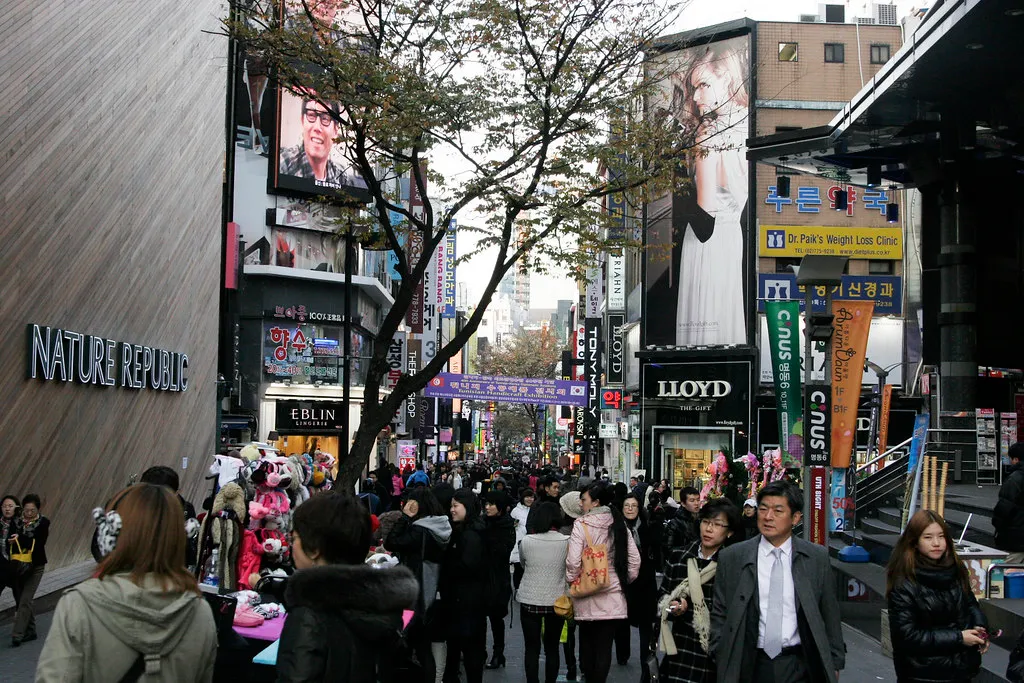
Money exchange in Seoul: licensed changers in Myeongdong usually beat banks, and airport counters are the worst. How to read the rate board and lose less.
 Money & Tax Refunds
WOWPASS Explained: Fees, Top-Ups and Is It Worth It? (2026)
WOWPASS is a prepaid card for foreigners in Korea: load cash in 16 currencies, pay by card anywhere, ride with built-in T-money. Fees and limits.
 Money & Tax Refunds
Korea Tax Refund for Tourists 2026: Get VAT Back at the Till
Korea tax refund for tourists: spend ₩15,000+ in one store, show your passport and the VAT comes off at the till under ₩1M. Bigger buys: the airport kiosk.
Sources
- Toyo Economy — Bank ATMs down 15.7% in three and a half years, Financial Supervisory Service data (Korean, 9 Sept 2026)
- Hankyung — Convenience store ATMs at GS25, CU and 7-Eleven fall to 28,783 stores (Korean, 9 Sept 2026)
- Hana Bank — ATM FAQ: foreign cards at Hana Global ATMs (Korean)
- Visit Seoul (Seoul Tourism Organization) — Money: ATMs and currency exchange
- VISITKOREA — Korean currency and exchange information (updated 27 Mar 2023)
- VISITKOREA — Foreign exchange banks at Incheon and Gimpo airports (updated 11 Sep 2026)
- Korea Federation of Banks — Currency exchange rules and cautions (Korean)
- Korea Customs Service — Currency declaration when entering and leaving Korea (Korean)
- Financial Supervisory Service — Credit card guide: paying abroad in your own currency (DCC) (Korean)
- Seoul Metropolitan Government — Cashless bus routes list (Korean, Jan 2026)
- Seoul Metropolitan Government — Foreign-issued cards accepted at subway ticket machines from 17 March 2026 (Korean)
- T-money — Foreigner guide: top-up and refund (English)