Money Exchange in Seoul: Where to Get the Best Rate (2026)
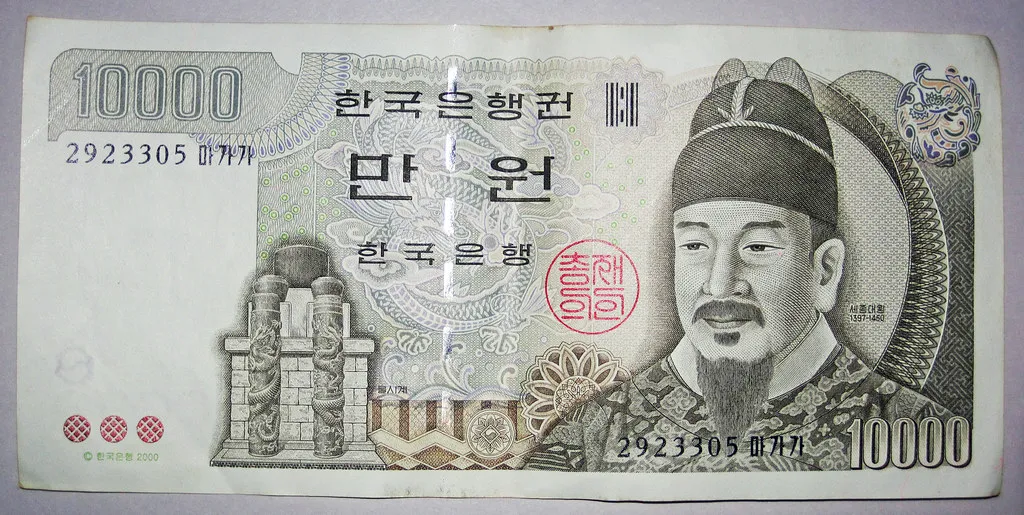
Quick answer: For money exchange in Seoul, licensed private exchange booths in Myeongdong (명동) usually give the most won for US dollars, euros and yen, city bank branches come next, and airport counters are usually the worst. Compare the “We Buy” rate at two or three booths, bring your passport, and keep every receipt. Change only first-day cash at the airport.
Rates move every day, so this guide shows you how to compare them yourself rather than promising one “best” shop. All figures below are dated. If you’d rather not carry cash at all, a foreign card at a Global ATM is often simpler; see our guide to ATMs that take foreign cards.
Where gets the best exchange rate in Seoul?
Licensed money changers in tourist areas usually beat banks, and banks beat the airport. The table compares your main options for turning foreign cash into won (원화).
| Where | Rate you get | Hours | Best for |
|---|---|---|---|
| Licensed exchange booth (환전소), e.g. Myeongdong | Often slightly better than banks for USD, EUR, JPY | Evenings and weekends in tourist areas | Changing a few hundred dollars or more |
| City bank branch (은행) | Bank cash rate, spread around 1–2% for USD | Weekdays, roughly 09:00–16:00 | Changing cash on a weekday, minor currencies |
| Airport exchange counter (공항 환전소) | Wider spreads than city branches | Typically 06:00–22:00 at Incheon, some 24 hours | First-day cash only |
| Unmanned kiosk / WOWPASS | Rate shown on the machine; no exchange fee claimed | Varies by location | Loading a prepaid card |
| Global ATM with your card | Depends on your card’s fees (see our ATM guide) | Many 24 hours | No cash to exchange |
Pick a Myeongdong booth if you’re changing a larger sum of a major currency. Pick a bank if it’s a weekday and you have a less common currency. Use the airport only for what you need to get to your hotel and eat on day one.
How do you read an exchange rate board?
Look at the column for what the booth or bank pays you for your currency, often labeled “We Buy” or 현찰 팔 때 at banks. That number is lower than the base rate, and the gap is the fee.
Korean banks quote three numbers:
- Base rate (매매기준율): the reference rate, not what you get.
- Cash buy rate (현찰 살 때): what you pay to buy foreign cash, set above the base rate.
- Cash sell rate (현찰 팔 때): what you get when you sell your foreign cash for won, set below the base rate.
The Korea Federation of Banks (은행연합회) uses a 1.75% spread in its worked example: with a base rate of ₩1,070, the bank sells dollars at ₩1,088.73 and buys them at ₩1,051.28. Take the market closing rate on Oct 22, 2026, ₩1,324.2 per dollar, as the base: a 1.75% spread means about ₩1,301 for each dollar you sell. On US$500, that is roughly ₩11,600 less than the base rate.
Two more rules from KB Kookmin Bank’s guide: currencies other than the dollar, euro and yen carry wider spreads because there is less demand for them in Korea, and foreign coins are bought at about 50% of the base rate. Bring notes, not coins.
Is Myeongdong money exchange really better?
Usually yes for US dollars: a March 2026 report put the gap at about 1% compared with banks.
- On March 27, 2026, Newspim reported that major banks were buying US dollar cash at about ₩1,480, while Myeongdong booths paid ₩1,495–1,500. On US$1,000, that was roughly ₩20,000 more at the booth.
- In a June 25, 2026 report, Money Today found Myeongdong booths trading dollars at ₩1,515–1,525, with lines of 5–6 people outside at busy moments.
The exchange rate has moved a lot since then, so treat these as examples of the gap, not current prices.
How to change money at a Myeongdong booth:
- Take Seoul subway Line 4 to Myeongdong Station (명동역) or Line 2 to Euljiro 1-ga (을지로입구).
- Check the “We Buy” rate for your currency on two or three boards before you go in.
- Ask for the total in won for your exact amount, and check whether any fee is added.
- Hand over clean, newer-series notes with your passport.
- Count the won at the counter and keep the receipt.
Visit Seoul says certified booths display a sign with the word “Certified” and currency symbols, and it tells visitors to avoid uncertified booths. Korea has about 1,320 registered money changers, supervised by the Korea Customs Service (관세청). In a 2026 crackdown on 104 high-risk changers, it found violations at 47, mostly false or missing transaction records. Stick to booths that post their rates and give you a printed receipt.
Should you exchange money at the airport?
Only a small amount. Airport counters charge wider spreads than city branches, so change enough for transport and your first meal, then exchange the rest in the city.
The Korea Federation of Banks notes that airport branches set their own exchange commission because operating costs such as rent are higher than at ordinary branches. Toss reported that on January 3, 2023, Incheon Airport bank counters charged spreads in the 4% range on dollars, against about 1% at ordinary branches before any discount. Check the board on the day; it may differ now.
At Incheon Airport, KB Kookmin (국민), Hana (하나) and Woori (우리) have bank branches in both terminals, open 09:00–16:00 on weekdays. The exchange counters themselves typically run 06:00–22:00, and some are open 24 hours (VISITKOREA, updated September 2026). At Gimpo, Shinhan Bank (신한은행) is on the 1st floor of the domestic terminal, to the right of the arrivals gate.
If your home bank’s foreign ATM fees are low, a Global ATM in the arrivals hall can be an alternative for first-day cash. See our Incheon Airport to Seoul guide for what you’ll need to pay for on the way into the city.
Are exchange kiosks and WOWPASS a good deal?
They’re convenient, and WOWPASS says it charges no exchange fee, but the rate is set by the operator, so compare it with a Myeongdong board. Kiosks suit you if you want a prepaid card more than banknotes.
WOWPASS machines accept 16 currencies and load the won onto a prepaid card you can tap for shops and transit. Its official FAQ says it doesn’t charge for currency exchange or payments. Withdrawing won cash from the card at a kiosk is limited to ₩100,000 a time with a ₩1,000 fee.
WOWPASS lists airport machines at Incheon Terminals 1 and 2, Gimpo and Jeju, but only Gimpo’s offers every service: the Incheon units (inside CU convenience stores) take won top-ups only, with no currency exchange, so plan to exchange at a machine in Seoul.
Pick WOWPASS if you’ll pay mostly by tap and want to avoid card fees from home. Skip it if you mainly need cash for markets and street food, since the cash-out limit is small. Our WOWPASS guide covers fees and refunds in detail.
How do you change leftover won before you leave?
Change won notes back at a bank or airport counter, and show your passport and your original exchange receipts. Spend the coins first.
- Receipts set your limit: ICBC Korea says non-residents can convert won back up to the amount they previously exchanged, with a passport and proof of the earlier exchange (외국환매입증명서 or a receipt). Ask for a receipt every time you exchange, and keep them all.
- Large sums are reported: Exchanges of more than US$10,000 are reported to the National Tax Service.
- Carrying cash out: If you leave Korea with more than US$10,000 in cash, you must declare it to customs.
- Coins: Use up won coins on transit top-ups or at a convenience store before you fly. Coins are a poor deal at exchange counters; KB Kookmin, for example, buys foreign coins at about half the base rate.
If you’re claiming a VAT refund at the airport, do that before you re-exchange, so you know how much won you have left. See our Korea tax refund guide.
FAQ
Is it better to exchange money before going to Korea?
You don’t need to for US dollars, euros or yen, which every Seoul bank and booth takes. Bring enough won, or a working card, for your first few hours, and compare rates in the city for the rest.
Do I need my passport to exchange money in Seoul?
Bring it. Banks ask for a passport, and you need the receipt issued in your name to change won back when you leave.
Which currencies get the best rates in Korea?
The US dollar, euro and Japanese yen get the narrowest spreads. Other currencies carry wider spreads, so you may lose less by bringing US dollars.
Are Myeongdong exchange booths safe?
Booths that are registered and post their rates are a normal way to change money in Seoul. Look for the “Certified” sign, count your won at the counter, and always take a receipt.
Can I use leftover Korean won coins?
Spend them before you fly. Leftover coins are best used to top up a T-money card or buy snacks, since you’ll want to change back notes, not coins.
Related guides
 Money & Tax Refunds
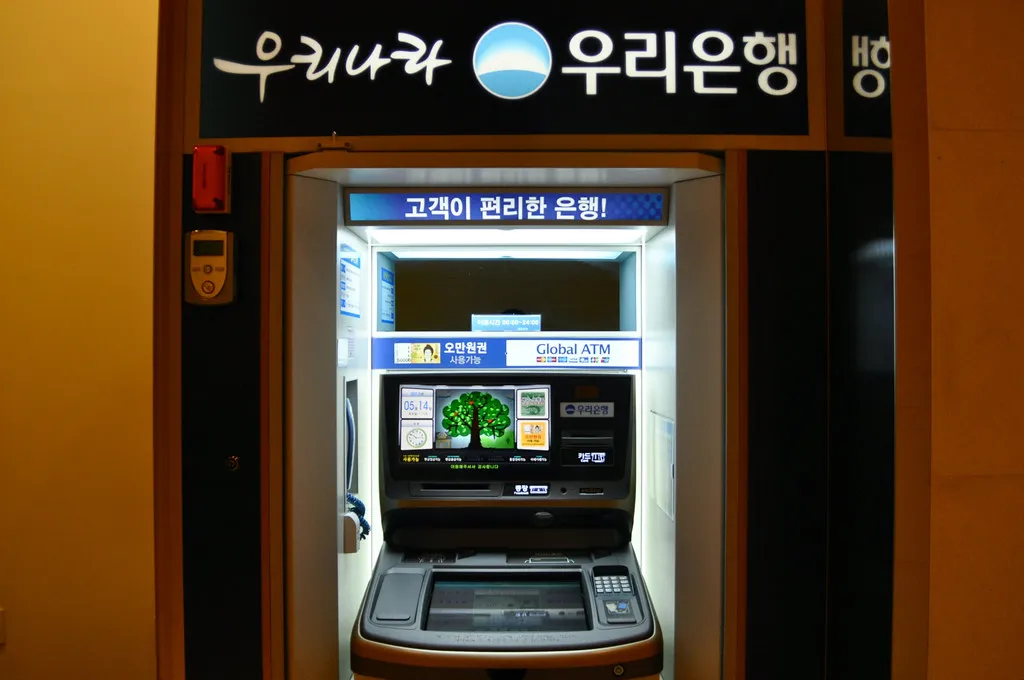
Korea ATMs That Take Foreign Cards: Fees and Exchange Tips (2026)
Korea ATMs take foreign cards when marked Global ATM with your card's logo. Choose won, not your home currency, and exchange at banks or certified booths.
 Money & Tax Refunds
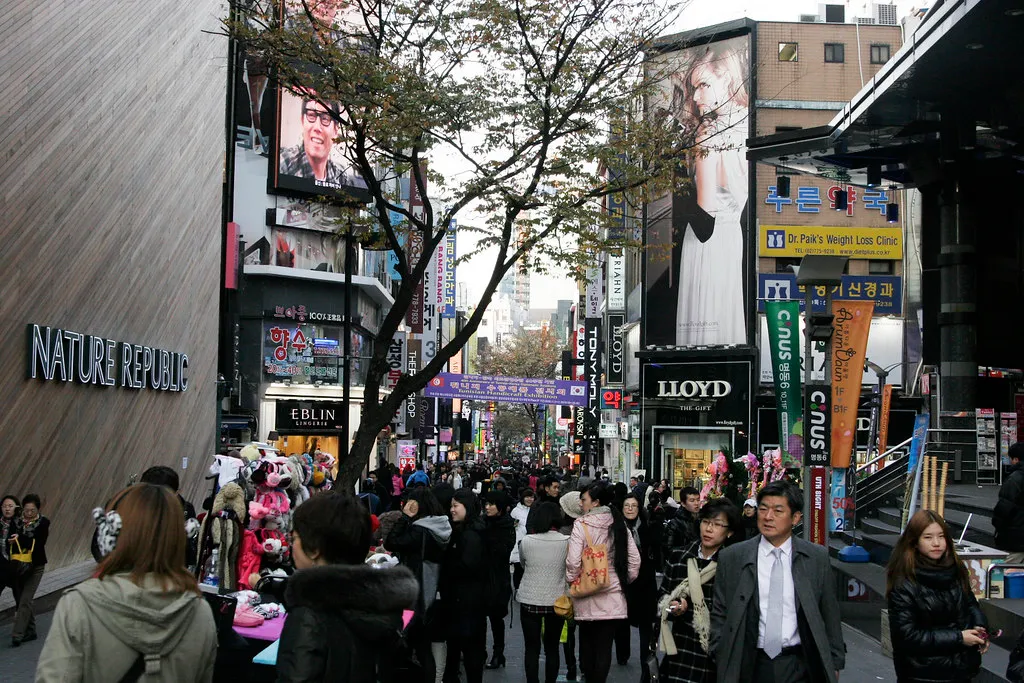
WOWPASS Explained: Fees, Top-Ups and Is It Worth It? (2026)
WOWPASS is a prepaid card for foreigners in Korea: load cash in 16 currencies, pay by card anywhere, ride with built-in T-money. Fees and limits.
 Money & Tax Refunds
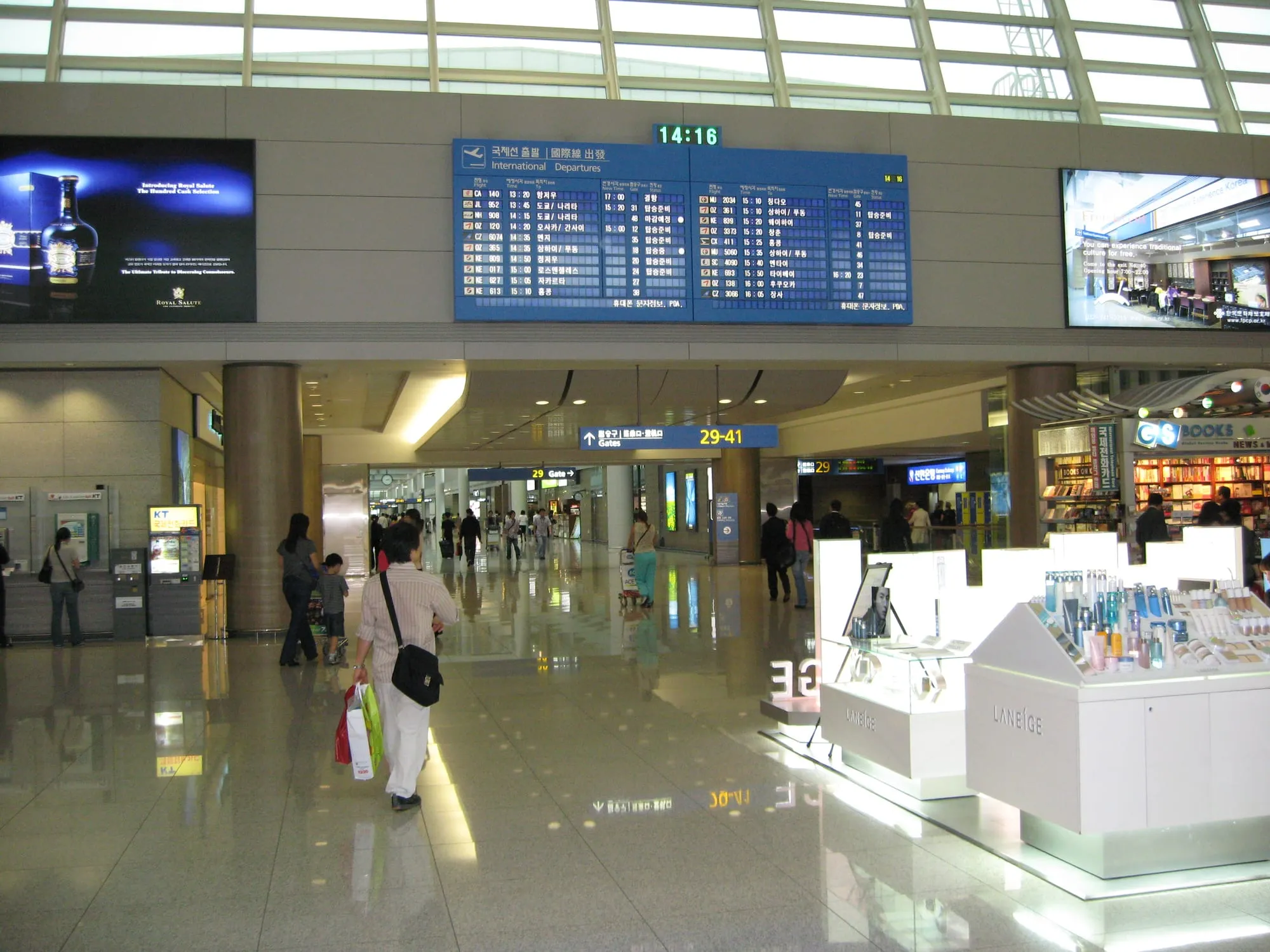
Korea Tax Refund for Tourists 2026: Get VAT Back at the Till
Korea tax refund for tourists: spend ₩15,000+ in one store, show your passport and the VAT comes off at the till under ₩1M. Bigger buys: the airport kiosk.
Sources
- Korea Federation of Banks — Exchange commission (spread) explained, with worked example (Korean)
- Korea Federation of Banks — Incheon Airport branch exchange commission comparison (Korean)
- KB Kookmin Bank (KB Think) — Buy and sell rates, spreads, minor currencies and coins (Korean, Dec 2025)
- Toss — Airport vs regular branch exchange commission (Korean, figures as of Jan 2023)
- VISITKOREA — Foreign exchange banks at Incheon and Gimpo airports (updated 11 Sep 2026)
- Visit Seoul (Seoul Tourism Organization) — Money: banks and certified exchange booths
- Newspim via Nate — Myeongdong exchange booths vs bank dollar rates (Korean, 27 Mar 2026)
- Money Today — Foreign tourists line up at Myeongdong exchange booths (Korean, 25 Jun 2026)
- Tax Times — Korea Customs Service crackdown: 47 of 104 money changers caught (Korean, 7 Jul 2026)
- Money Today — Won-dollar closes at 1,324.2 (Korean, 22 Oct 2026)
- ICBC Korea — Currency exchange rules for non-residents (English)
- WOWPASS — Official FAQ (English)