Korea Fall Foliage 2026: When and Where It Peaks (Official Forecast)
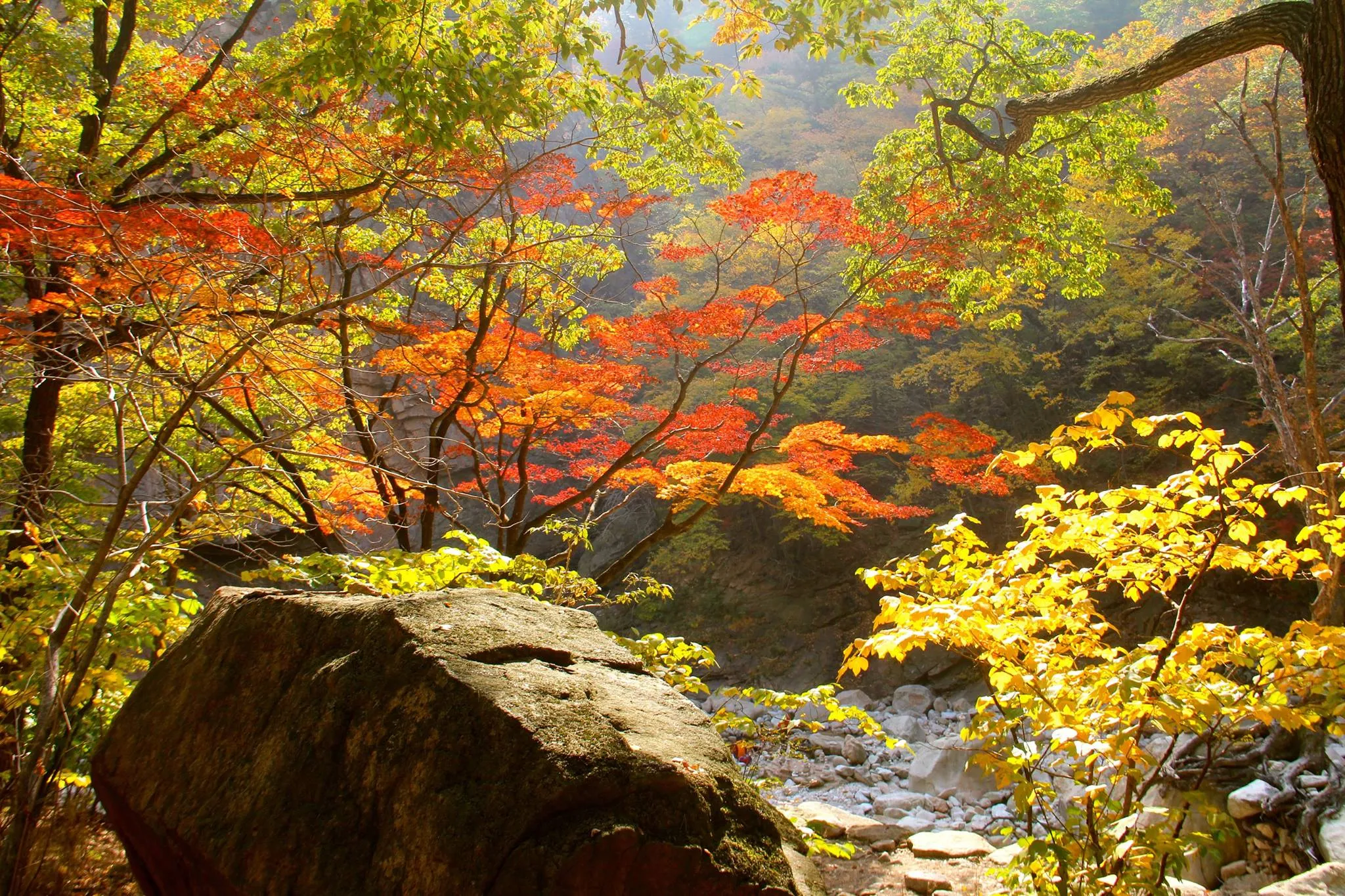
Quick answer: Korea fall foliage in 2026 peaks nationwide in late October, according to the Korea Forest Service (산림청) forecast: Seoraksan around October 20, Songnisan October 28, Naejangsan November 4 and Hallasan (Jeju) November 6. If you arrive in November, head south or to Jeju, or walk Seoul’s ginkgo streets. Check the weather agency’s live photo status before you go, because actual timing shifts with the weather.
All dates below come from Korean government releases: the Korea Forest Service forecast of 22 September 2026, the Korea Tourism Organization’s foliage map of 8 October 2026, and the Korea Meteorological Administration (기상청). They are forecasts, not guarantees.
When does fall foliage peak in Korea in 2026?
The Korea Forest Service expects foliage to peak across the country in late October 2026, starting in the northern mountains of Gangwon Province in early October and moving south. The first color of the year was recorded on 14 September at the Jeombongsan Forest Genetic Resources Reserve (점봉산 산림유전자원보호구역), by a citizen observer.
The forecast counts “peak” as the point when 50% of the leaves have turned. The Forest Service says this year’s peaks come about 0.8 days later than peak timing over the last five years.
| Place or tree | Korean name | Region | 2026 forecast peak |
|---|---|---|---|
| Seoraksan | 설악산 | Gangwon (northeast) | 20 October |
| Songnisan | 속리산 | Chungbuk (center) | 28 October |
| Naejangsan | 내장산 | Jeonbuk (southwest) | 4 November |
| Hallasan | 한라산 | Jeju | 6 November |
| Ginkgo trees, nationwide | 은행나무 | — | 30 October |
| Maples, nationwide | 단풍나무류 | — | 31 October |
| Oaks, nationwide | 참나무류 | — | 31 October |
Treat each mountain date as the middle of your planning window rather than a single good day, and confirm with the live photo pages in the last section before you book.
Where can you still see fall colors in November?
In November, go south, go to Jeju, or stay at lower elevations in the cities. The Korea Tourism Organization (한국관광공사) map, built with the Korea National Arboretum (국립수목원), expects the Seoul capital area and Gangwon to color from late October, and the Gyeongsang and Jeolla provinces in the south to peak in early to mid-November.
The map divides the country into 6 regions and lists 36 spots. These are the seven it highlighted, with what each one is known for:
| Spot | Korean name | Province | What you see |
|---|---|---|---|
| Incheon Grand Park | 인천대공원 | Incheon | Tunnels of colored trees |
| Goseokjeong National Tourist Site | 고석정국민관광지 | Cheorwon, Gangwon | Foliage along the Hantangang river canyon |
| Sapgyoho Lake | 삽교호 | Dangjin, Chungnam | Red sunset behind a navy ship |
| Mungwang Reservoir | 문광저수지 | Goesan, Chungbuk | Yellow ginkgo trees over the water |
| Geochang Changpowon | 거창창포원 | Geochang, Gyeongnam | Golden reeds and foliage in a waterside eco-park |
| Meta Provence | 메타프로방스 | Damyang, Jeonnam | Orange metasequoia avenue |
| Ttarabi Oreum | 따라비오름 | Seogwipo, Jeju | Silver grass on a volcanic cone |
Pick by your dates:
- Late October: Seoraksan and the Gangwon mountains, then Songnisan.
- First week of November: Naejangsan, Hallasan, and ginkgo streets in Seoul.
- Mid-November: the southern provinces (Gyeongsang and Jeolla), which the tourism map expects to peak in early to mid-November.
Where can you see fall leaves in Seoul without leaving the city?
Seoul’s city government lists official foliage streets (서울 단풍길), most of them lined with ginkgo or zelkova trees. Ginkgo trees nationwide are forecast to peak around 30 October, so city streets are a good bet in the last days of October and the first days of November. The National Arboretum’s address search gives a predicted peak of 1 November for Gyeongbokgung Palace and 2 November for Deoksugung Palace and Namsan Park (checked 14 October).
| Street | Korean name | District | Trees | Length |
|---|---|---|---|---|
| Samcheong-dong-gil | 삼청동길 | Jongno | Ginkgo, along the Gyeongbokgung Palace wall | 1.2 km |
| Deoksugung-gil | 덕수궁길 | Jung | Ginkgo and zelkova by the palace stone wall | 0.3 km |
| Sowol-ro | 소월로 | Yongsan | Ginkgo, linked to Namsan Park | 2.9 km |
| Itaewon-ro | 이태원로 | Yongsan | Ginkgo and large plane trees | 1 km |
| Jungnangcheon embankment | 중랑천 제방길 | Dongdaemun | Zelkova and cherry trees by the stream | 5.6 km |
| World Cup-ro | 월드컵로 | Mapo | Zelkova, next to Haneul and Noeul parks | 2.0 km |
Samcheong-dong-gil and Deoksugung-gil are the easiest for a first visit because they sit next to palaces you are likely to see anyway. Type the Korean name into a map app to get walking directions, and use a transit card to hop between them; our Seoul transit card guide explains which one to buy.
Why do different forecasts give different peak dates?
The Korea Forest Service and the Korea Meteorological Administration use different definitions, so their “peak” dates don’t line up. The Forest Service counts a peak at 50% of leaves turned. The weather agency counts first foliage at about 20% of a mountain colored from the summit down, and peak at about 80%.
| Korea Forest Service (산림청) | Korea Meteorological Administration (기상청) | |
|---|---|---|
| What it publishes | Forecast map of peak dates | Observed status with photos |
| “Peak” means | 50% of leaves turned | About 80% of the mountain colored |
| Seoraksan 2026 | Forecast peak 20 October | First foliage observed 28 September |
| Seoraksan reference | — | Normal peak 17 October; 2025 peak 24 October |
At Seoraksan, the weather agency saw first color on 28 September 2026, four days earlier than in 2025 and the same as the long-term normal. English travel blogs often quote a single “peak week” without saying whose definition they use. When dates disagree by a few days, trust the latest photos over any forecast.
How do you check the foliage right before you go?
Check two free Korean government services a few days before you travel. Both work on a phone, and the place names are easy to copy in Korean.
- Search your exact destination. Open the National Arboretum’s plant-season site (knpn.nature.go.kr) and go to 관측기록 (observation records), then 계절예측 (seasonal forecast). Type a road address or building name, such as 덕수궁 or 내장산, to get that spot’s predicted peak date. Expect small differences from the Forest Service map: on 14 October the search gave 8 November for Naejangsan, four days after the map’s 4 November. The service opened on 29 September 2026 and uses records from 829 citizen observers.
- Look at this week’s photos. On the weather agency site (weather.go.kr), open 현재날씨 (current weather), then 봄꽃·단풍 (spring flowers and foliage), then 유명산 단풍현황 (famous-mountain foliage). It shows before, first-color and peak photos for 21 mountains, from 21 September to 27 November 2026.
- Watch live video for Gangwon. The weather agency’s Gangwon foliage service (kma.go.kr/gangwon/maple) shows foliage status and weather for national park trails in Seoraksan, Odaesan, Chiaksan and Taebaeksan, plus live video of major mountains.
- Have a backup. If your mountain has passed its peak, move one region south or drop to a city park; the peak moves south and downhill through November.
FAQ
Is early November too late for fall foliage in Korea?
No. The 2026 forecast puts Naejangsan at 4 November and Hallasan at 6 November, and the southern provinces peak in early to mid-November. Gangwon’s high mountains will be past their best by then.
When is the best time to see fall leaves in Seoul?
Late October to early November. The capital area colors from late October, and ginkgo trees nationwide are forecast to peak around 30 October. Search a specific place on the National Arboretum’s 계절예측 page for its own date.
Is Seoraksan or Naejangsan better for fall foliage?
It depends on your dates more than the scenery. Seoraksan’s 2026 forecast peak is 20 October and Naejangsan’s is 4 November, about two weeks apart, so go to whichever one matches your trip.
Do fall foliage forecasts change during the season?
Forecasts are made in September, and actual timing shifts with the weather. The weather agency updates its 21-mountain photo page through 27 November, so use it for the final check.
What does “peak foliage” mean in Korea?
For the Korea Forest Service and National Arboretum, it means 50% of leaves have turned. For the weather agency, it means about 80% of a mountain is colored. Always check which one a date refers to.
Related guides
 Trip Planning
Lotte World Tickets vs Everland: 2026 Prices, Deals and Buses
Lotte World tickets cost ₩67,000 at the gate but ₩46,900 booked online the same day. Everland is ₩71,000 in October. Prices, deals and how to get there.
 Trip Planning
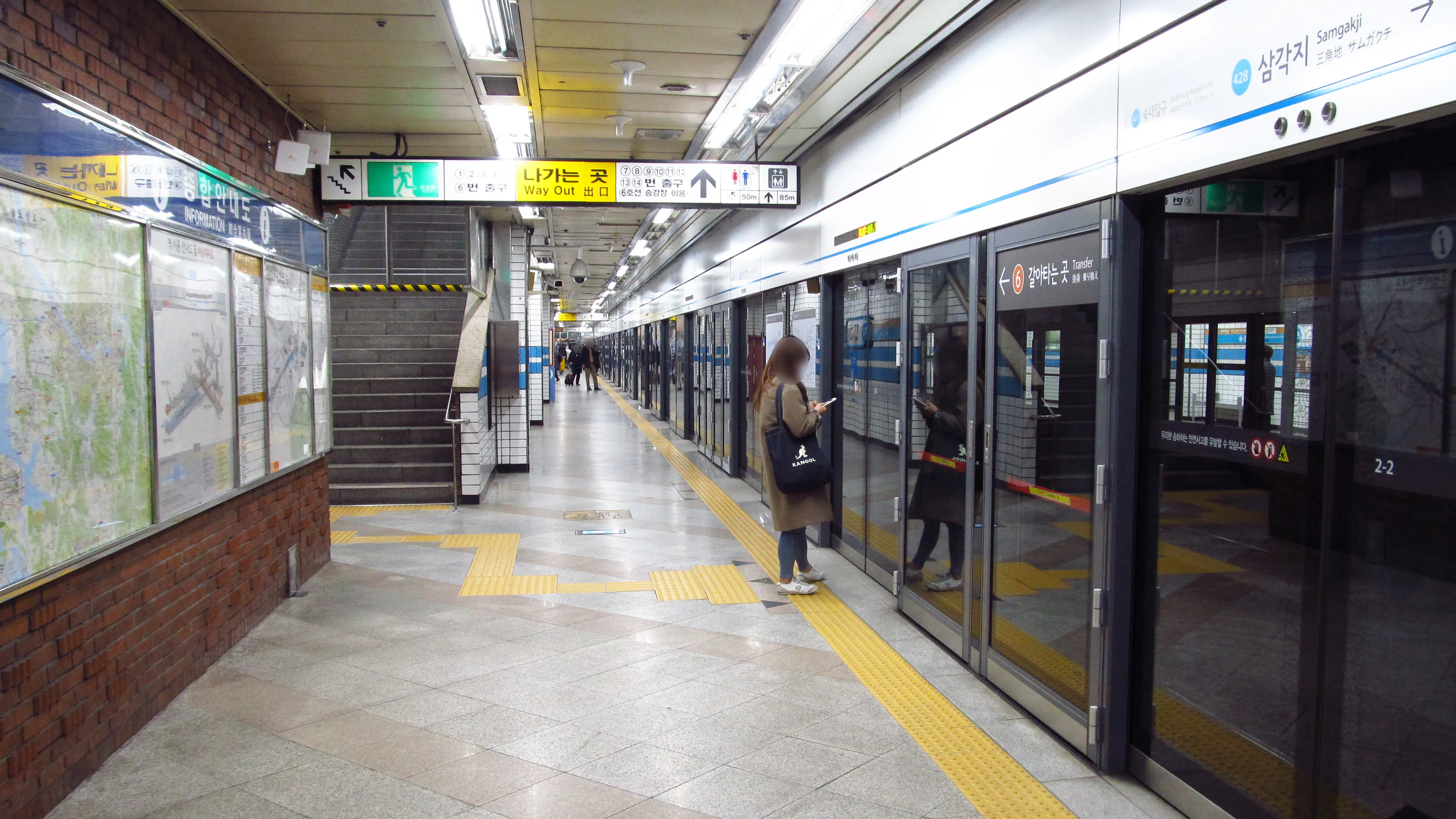
Lost and Found in Seoul: Subway, Taxi, Airport and Police (2026)
Lost and found in Seoul: tell station staff your train time and door number, check Seoul Metro's four centers, then search found items on Police Minwon24.
 Trip Planning
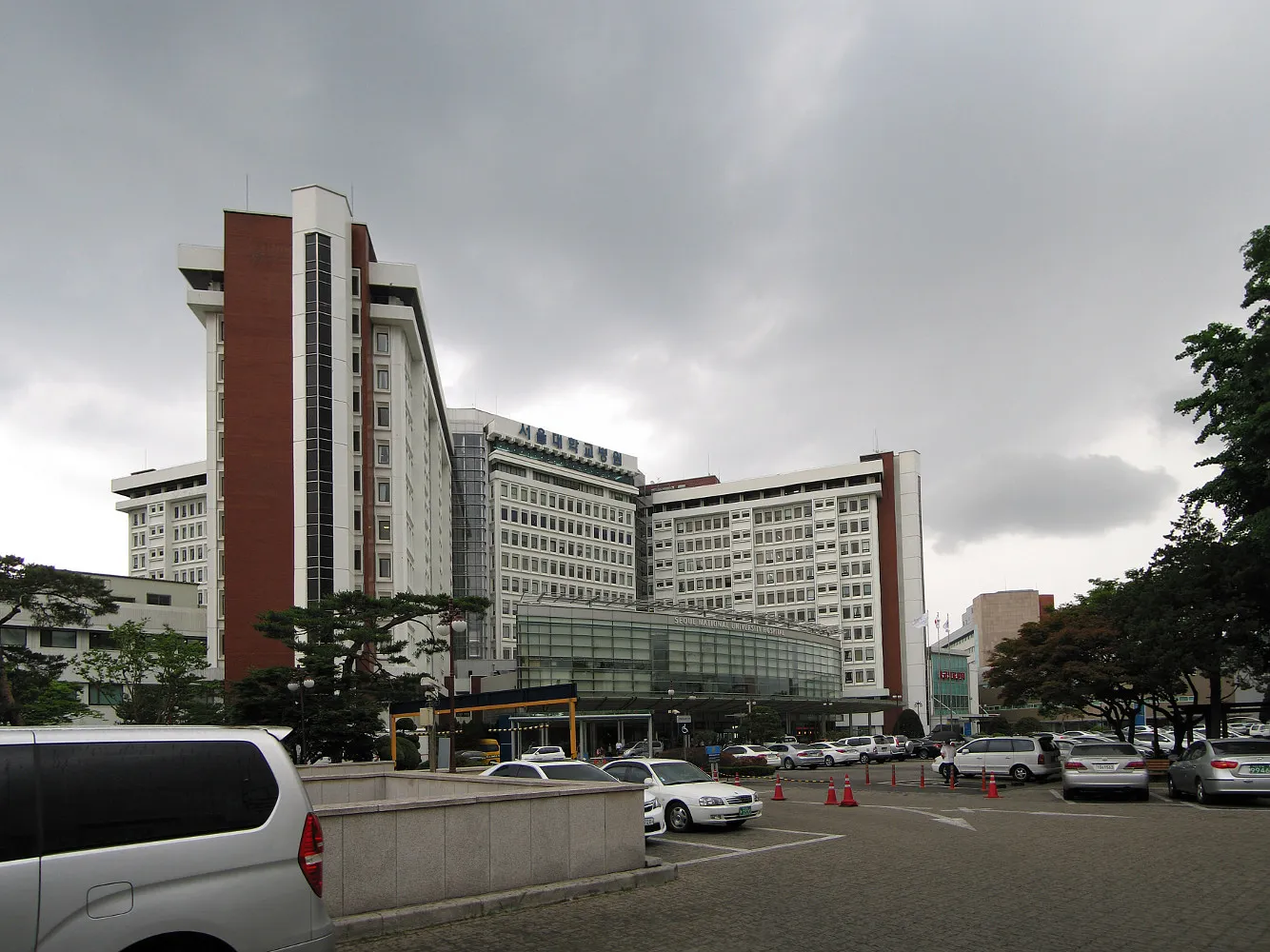
Doctor in Korea as a Tourist: Clinics, Pharmacies, 119 and 1330 (2026)
Seeing a doctor in Korea as a tourist: call 119 in emergencies, use a local clinic for minor illness, and expect to pay the full bill without insurance.
Sources
- Korea Forest Service — 2026 Korean Peninsula foliage peak forecast map (Korean, 22 Sep 2026)
- Korea National Arboretum — Foliage peak search service by address (Korean, 29 Sep 2026)
- Korea National Arboretum — First foliage of 2026 observed at Jeombongsan (Korean, 17 Sep 2026)
- Korea Tourism Organization — '2026 Foliage Map' with regional peaks and 36 spots (Korean, 8 Oct 2026)
- Korea Meteorological Administration, Gangwon office — Seoraksan first foliage, definitions and 21-mountain status page (Korean, 28 Sep 2026)
- Seoul Metropolitan Government — Autumn foliage streets in Seoul (Korean)