Tipping in Korea (2026): Who Expects It and the Etiquette That Matters
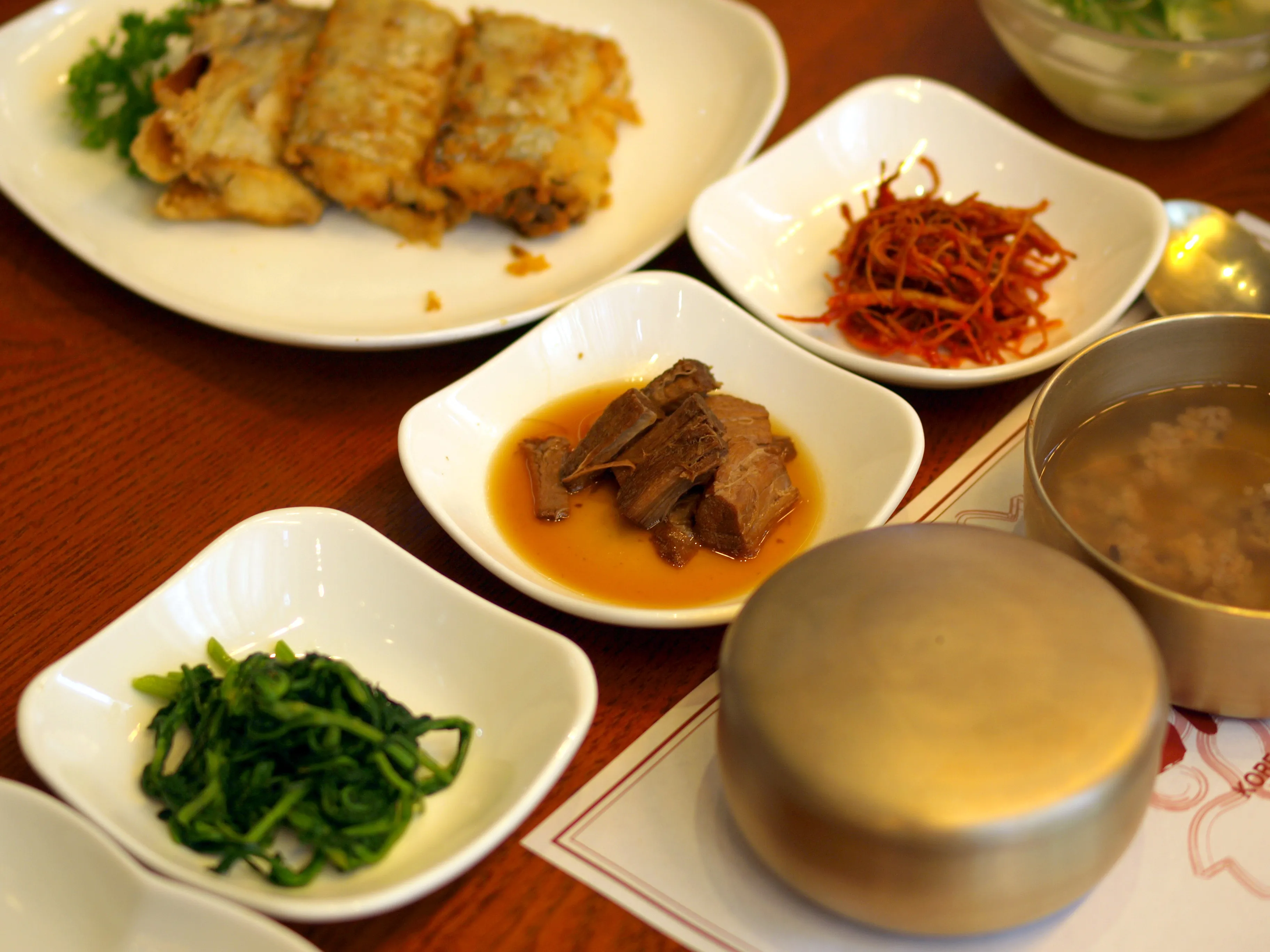
Quick answer: Tipping in Korea is not expected anywhere you will normally go: restaurants, cafés, taxis, hotels or shops. Since January 2013, Korean law has required restaurant and café menus to show the final price including VAT and service charge, so the number on the menu is the number you pay. A tip jar or app tip screen is rare and always optional; skipping it is not rude.
What tends to trip visitors up is not the bill but everyday public rules: who sits in the subway’s priority seats, what you can carry onto a city bus, and where smoking costs ₩100,000. Those are below too.
Do you tip in Korea?
No. Korea has no tipping custom, and the price rules make it unnecessary. Under the Food Sanitation Act rules, every food business (일반음식점, 휴게음식점, cafés included) must display a final price (최종지불가격) that already contains VAT (부가가치세) and any service charge (봉사료). Writing “+10% VAT” or “service charge extra” on the menu is not allowed.
The rule took effect on January 1, 2013. The Seoul Metropolitan Government’s food safety office spells out two more details that help you read a menu:
- Restaurants with a registered floor area of 150 m² or more must post at least five main dishes with their final prices outside the door, so you can check before you sit down.
- Meat you grill yourself (Korean BBQ) must be priced per 100 g; a per-serving weight can be shown next to it.
In practice, your card receipt will match the menu total. If staff try to add a separate “service” line, that conflicts with the posted-price rule, and you can ask what it is for.
Tipping by situation: restaurants, taxis, hotels, tours
The short version: you do not tip anywhere on this list unless you choose to. Here is what to do in each place.
| Situation | Is a tip expected? | What to do instead |
|---|---|---|
| Restaurants and BBQ places | No | Pay the menu price at the counter (계산대) on your way out |
| Cafés and bakeries | No | Ignore any tip box; it is optional |
| Taxis | No | Pay the meter or app fare; keep your change |
| Hotels (rooms) | No | Check the booking total already includes taxes |
| Hotel porters, housekeeping | No | A thank-you is enough |
| Private tour guides | Not expected | Optional; follow the tour company’s booking page |
| Hair salons, spas | No | Pay the listed price |
Pick a tip only if a private guide has spent a full day with you and you want to show thanks. Hand it over with both hands, and do not be surprised if it is politely refused at first. For everything else, a clear “감사합니다” (gamsahamnida, thank you) does the job.
What about tip jars and tip screens?
You may occasionally see one, but they are new, rare and controversial in Korea. In August 2023 a bakery café put a box at the till reading “please tip if you liked our shop”; after a public backlash it explained the box was decoration, said nobody had to pay, and it disappeared.
The same summer, Kakao Mobility added an optional “thank-you tip” (감사 팁) to the Kakao T app as a trial starting July 19, 2023, for its Blue, Black, Mobeom (deluxe), Venti and Pet taxis only:
- It appeared only after you rated the ride 5 stars.
- You could choose ₩1,000, ₩1,500 or ₩2,000.
- About 3.5% was deducted for card and transfer fees before the driver got it.
A survey by the consumer data platform OpenSurvey (오픈서베이) found 71.7% of respondents leaned against tipping in taxi apps, and only 17.2% leaned in favor. If the screen appears in your app, tapping “skip” is completely normal. Our Kakao T guide covers paying for taxis with a foreign card.
Restaurant etiquette that actually matters
The rules that matter at the table are about getting service and paying. Korean restaurants rarely bring the bill to your table, and staff will not keep checking on you.
- Call staff with the button on the table (호출벨, hochulbel) if there is one, or say “저기요” (jeogiyo, excuse me) at a normal volume.
- Order and refills: side dishes (반찬, banchan) are usually refillable for free; ask with “이거 더 주세요” (igeo deo juseyo, more of this please).
- Pay at the counter on your way out. Many places have a tablet or kiosk at the table instead; you pay there and no one comes to collect.
- Shoes off where the seating is on a raised floor (좌식): leave them at the step before you walk onto the floor.
Pouring drinks for others before yourself, and handing over a card or cash with both hands, are customary courtesies rather than rules. Nobody expects a visitor to get them perfect.
Subway and bus etiquette in Seoul
The two things locals notice most are the reserved seats on the subway and takeaway cups on the bus. On Seoul Metro trains, each car has 12 “transportation-vulnerable” seats (교통약자 보호석, formerly called seats for the elderly and disabled), or 8 on new trains. Each car also has 7 consideration seats (교통약자 배려석), 6 on new trains, which include the pink pregnancy seats (임산부 배려석).
| Seat | Korean | Who it is for | What visitors should do |
|---|---|---|---|
| Priority seats | 교통약자 보호석 | Older people, disabled people, pregnant women, people with small children | Leave them for those riders |
| Pink seats | 임산부 배려석 | Pregnant women | Leave it empty |
| Other seats | 일반석 | Anyone | Sit, but give it up to someone older if asked |
Neither seat type comes with a fine, but the pink seats are meant to be left free, and taking them draws steady complaints from Korean riders. More on lines and transfers in our Seoul subway guide.
Buses are stricter about drinks. Since January 4, 2018, a Seoul city ordinance lets bus drivers refuse to carry passengers holding food or drink that can spill, and ask anyone eating on board to get off. Seoul’s detailed rules:
- Can be refused: hot or iced drinks in disposable takeaway cups, cups of food such as tteokbokki, cans or bottles that are open or have a straw.
- Allowed: capped plastic bottles, unopened cans, sealed tumblers, and boxed food you are carrying home.
So finish your coffee before you board, or put a lid on a tumbler.
Where can you smoke in Korea?
Not in most public spots: smoking in a designated no-smoking zone (금연구역) carries a fine of up to ₩100,000. In Seoul that includes the area within 10 m of every subway entrance (since 2016) and median-lane bus stops (since March 2012), plus spots each district designates, such as Seoul Station Plaza (since June 2025).
Since April 24, 2026, the fine also covers liquid e-cigarettes and every other tobacco product, not just regular cigarettes. If you smoke, look for a marked smoking area (흡연구역) and check signs before you light up.
What changed recently
- Jul 2023: Kakao T trialed an optional ₩1,000–₩2,000 thank-you tip for taxi drivers after 5-star rides.
- Aug 2023: A café tip box sparked a national debate; a survey found 71.7% leaned against app tipping in taxis.
- Apr 24, 2026: No-smoking zone fines (up to ₩100,000) extended to liquid e-cigarettes.
FAQ
Is it rude to tip in Korea?
Not rude, just unusual. Staff may be confused or try to hand the money back, especially in restaurants and taxis. A thank-you is the normal way to show appreciation.
Should I tip a taxi driver in Korea?
No. Pay the meter or app fare and take your change. If the Kakao T app shows a tip screen after a 5-star rating, it is optional.
Is there a service charge in Korean restaurants?
Not a separate one on the bill. Since January 2013 menu prices must already include VAT and any service charge, so the menu price is the final price.
Do you tip at Korean hotels?
It is not expected for porters or housekeeping. Check that your booking total already includes taxes before you pay.
Can I drink coffee on the Seoul bus?
Not from an open takeaway cup: the driver can refuse to let you board under a 2018 Seoul ordinance. A capped bottle or sealed tumbler is fine.
Related guides
 Trip Planning
Gwangjang Market Food Guide (2026): What to Eat, Prices, Hours
Gwangjang Market's food alley runs 9 a.m.–11 p.m. daily. What to eat, dated stall prices, cash vs card, and how to avoid being overcharged in 2026.
 Trip Planning
Korean BBQ Seoul Guide (2026): How to Order, Cuts, Prices, Solo
Korean BBQ in Seoul: pork belly averaged ₩21,321 per 200g in June 2026, many places want 2 portions, and how to read cuts and origin labels.
 Trip Planning
Jjimjilbang Seoul Guide (2026): Prices, Rules and Which Spas Are Open
Jjimjilbang in Seoul: tickets from about ₩7,000 at 24-hour Spa Rex to ₩18,000+ at Aquafield, kid and teen rules, and which famous spas closed.
Sources
- Seoul Metropolitan Government Food Safety Information — Restaurant price display rules: final price incl. VAT and service charge (Korean)
- Korea.kr policy briefing — Restaurant menus must show the final amount from January 2013 (Korean, Jul 11, 2012)
- Seoul Metropolitan Government Traffic News — Detailed rules for food and drinks on Seoul city buses (Korean)
- Newsis — Seoul Metro priority and consideration seats per car (Korean, Jul 12, 2026)
- SBS Biz — E-cigarettes included in no-smoking zone fines from April 24, 2026 (Korean)
- Seoul Shinmun — No smoking within 10 m of subway entrances, fines up to ₩100,000 (Korean, Apr 30, 2016)
- Seoul Shinmun — ₩100,000 fine for smoking at median-lane bus stops (Korean, Feb 21, 2012)
- Seoul Shinmun — Seoul Station Plaza becomes a no-smoking zone, ₩100,000 fine from June 1 (Korean, May 29, 2025)
- YTN — Café tip box backlash and survey on taxi app tips (Korean, Aug 23, 2023)
- Etoday — Kakao T adds an optional 'thank-you tip' for taxi drivers (Korean, Jul 25, 2023)