Driving in Korea as a Tourist: IDP, Rental Rules and Road Laws (2026)
Some links in this guide are affiliate links: if you book through them, we may earn a commission at no extra cost to you. Details.
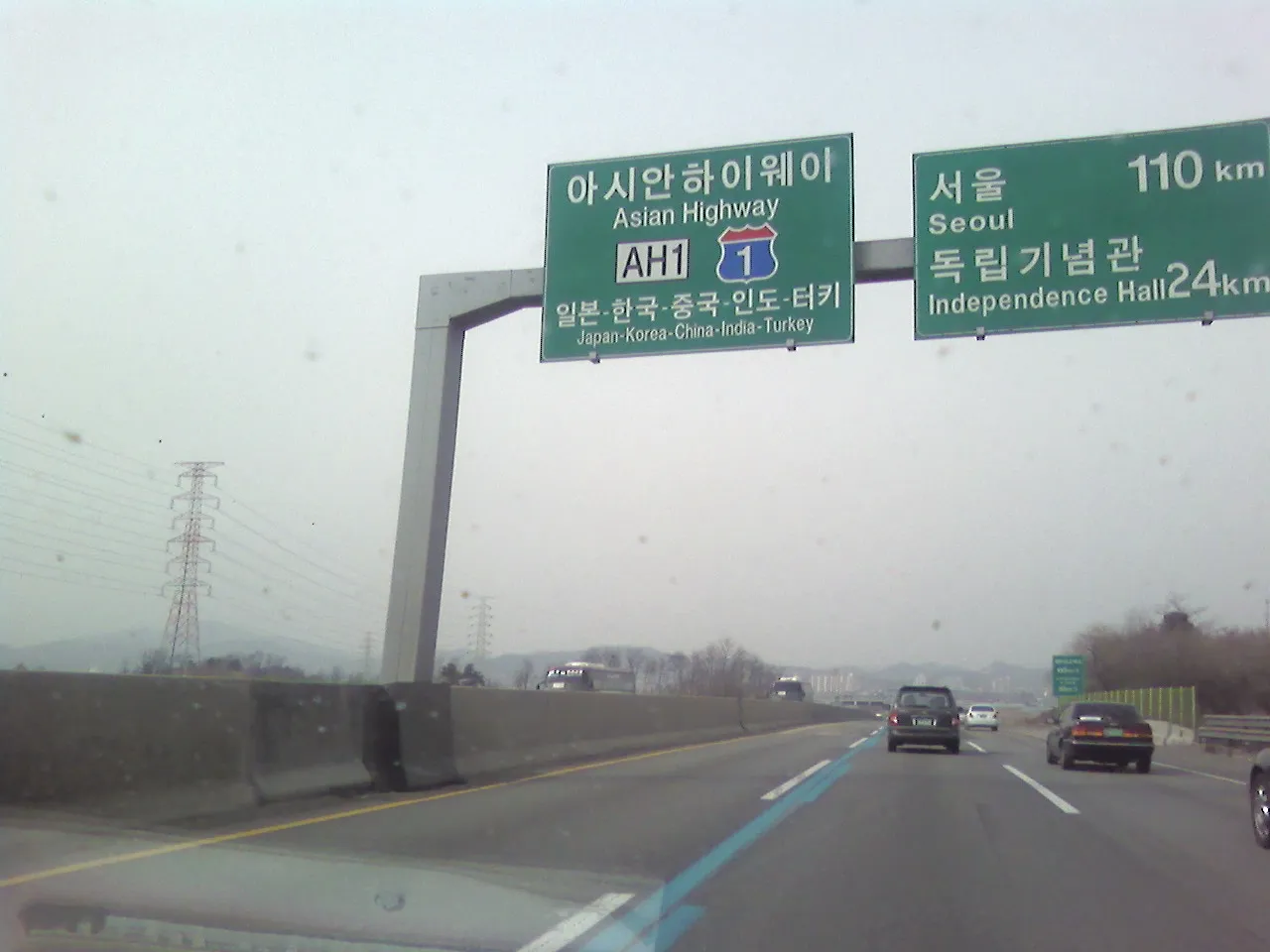
Quick answer: Driving in Korea as a tourist is legal with an International Driving Permit (국제운전면허증) from a country in the 1949 Geneva or 1968 Vienna road traffic conventions. It’s valid for 1 year from the day you enter Korea, and it covers rental cars. Skip the car in Seoul, where transit is faster, and rent one for Jeju or the countryside.
Can tourists drive in Korea?
Yes, if you hold the right permit. Article 96 of Korea’s Road Traffic Act (도로교통법) lets visitors drive for 1 year from their date of entry with an international driving permit issued under:
- the 1949 Geneva Convention on Road Traffic,
- the 1968 Vienna Convention on Road Traffic, or
- a mutual-recognition agreement between Korea and the issuing country.
You can drive only the vehicle classes printed on your permit. The same article bars you from driving commercial vehicles such as taxis or delivery trucks, but it explicitly allows rental cars.
LOTTE Rent-a-Car asks to see the original permit. Its published document list doesn’t name your home license, but bring it anyway: the permit is issued against it, and other rental desks may ask. Mainland China isn’t in either convention, Korea’s Road Traffic Authority says, so a Chinese mainland license can’t be used to rent a car. Korean media in July 2026 reported that Jeju isn’t reviewing a change.
| Your license | Can you drive in Korea? |
|---|---|
| US license + AAA-issued IDP | Yes, accepted by LOTTE Rent-a-Car |
| UK, Canadian or Australian license + IDP from your national issuer | Yes, if the permit is a Geneva or Vienna convention permit |
| An EU-issued “International Driver’s License” | No; LOTTE says EU international licenses aren’t valid in Korea, so check that yours is a Geneva or Vienna convention permit |
| IDP from a private online company | No; LOTTE rejects permits from private organizations |
| Mainland Chinese license | No |
Get the permit at home before you fly. It’s a paper booklet, and LOTTE says photocopies, PDFs and photos aren’t accepted.
What do you need to rent a car in Korea?
You need your passport, the original permit, a Korean address and phone number, and a card in your name. LOTTE Rent-a-Car’s published rules for foreign renters are below; other companies may differ, so check yours before you book.
| Requirement | LOTTE Rent-a-Car rule |
|---|---|
| Age | 21 to 79 on the pickup date |
| Permit | Original IDP stamped B, D or E for cars up to 9 seats |
| Permit validity | 1 year from your entry date; staff may ask for your flight ticket to check it |
| Documents | Passport, original IDP, a Korean address (your hotel) and a contact number |
| Payment | Credit or debit card in the name of the renter, driver or a companion; no cash |
| Taiwan permits | Accepted |
Pack the permit in your carry-on: it has to be the original, so a forgotten booklet can’t be fixed by email.
How do insurance and traffic fines work?
Every LOTTE rental includes third-party liability, and you choose how much you’d pay for damage to the car itself through its collision damage waiver (자차 면책금). Only drivers named on the contract are covered, so add your partner if you plan to share the wheel.
| Coverage | LOTTE Rent-a-Car terms |
|---|---|
| Third-party liability | Unlimited for injury to others |
| Property damage | Up to ₩20 million per accident |
| Your own injuries | Up to ₩15 million per person |
| Damage to the rental (CDW excess) | ₩0 option for Korean-brand cars; ₩0 or ₩300,000 for foreign brands; ₩0 available on Jeju |
| Under-30 surcharge | Daily fee on the mainland; none on Jeju |
| Lost rental income after an at-fault accident | Up to 50% of the daily rate; waived on Jeju with the ₩0 CDW |
Fines follow you, not the car company. LOTTE says you’re responsible for parking, bus-lane and seat-belt fines during the rental, settles them when you return the car, and warns that violations can reduce your insurance cover. LOTTE may also take a deposit to cover possible fines. Korean police say fines are almost impossible to collect once a foreigner leaves: unpaid fines from foreign rental drivers reached ₩1.69 billion over 2021–2025, according to police data reported in July 2026.
Which Korean road rules catch visitors out?
The rules that surprise most visitors are the right-turn stop, low city speed limits and a strict alcohol limit. Here are the ones with dated official sources:
| Rule | What it means | Since |
|---|---|---|
| Right turn on red | Stop fully at the stop line or crosswalk before turning right when your signal is red, even if nobody is crossing. Stop for anyone crossing during the turn. Where there’s a right-turn arrow, wait for it. | Enforced from 22 April 2023 |
| City speed limits (안전속도 5030) | 50 km/h on main city roads, 30 km/h on side streets | Nationwide from 17 April 2021 |
| Seat belts | Required in every seat on every road; the driver gets the ₩30,000 fine for an unbelted passenger (₩60,000 for a child under 13); children under 6 need a car seat | 28 September 2018 |
| Drink-driving | Illegal from 0.03% blood alcohol | Current law |
Drink-driving penalties under Article 148-2 rise with the reading:
| Blood alcohol | Prison | Fine |
|---|---|---|
| 0.03% to under 0.08% | Up to 1 year | Up to ₩5 million |
| 0.08% to under 0.2% | 1 to 2 years | ₩5–10 million |
| 0.2% or more | 2 to 5 years | ₩10–20 million |
Watch for bus-only lanes in cities: LOTTE lists bus-lane violations among the fines renters pay. After any accident, contact your rental company right away: only drivers named on the contract are covered, and violations can reduce what insurance pays.
Should you drive in Jeju?
Jeju is where a rental car makes the most sense, because buses work less well for remote inland stops. Drive carefully: rental cars made up 11.4% of all traffic accidents on Jeju over the past five years, according to Jeju’s autonomous police, the only double-digit share among Korea’s provinces and major cities.
Pick a car if you want to hop between inland oreums (volcanic cones), cafés and beaches in one day. Pick the bus if you’re staying in Jeju City or Seogwipo and seeing two or three sights a day; our Jeju without a car guide covers fares and routes.
When booking, compare LOTTE’s own site with an aggregator such as Localrent, and check each listing’s permit, age and insurance terms. LOTTE offers a ₩0 damage excess and no under-30 surcharge on Jeju, which a cheaper headline price elsewhere may not include.
What navigation app works for driving?
Use Naver Map, not Google Maps. Google hasn’t offered driving directions in Korea because Korean law restricted exporting detailed map data, and a conditional approval for map data came only in February 2026. Korean media reported in September 2026 that Google was aiming to launch car navigation in early 2027, but Google hadn’t announced a date. Our Naver Map guide shows how to switch the app to English.
If you’re picking up a car near the airport, our Incheon Airport to Seoul guide compares that with the train and bus.
FAQ
Do I need an International Driving Permit in Korea?
Yes, for almost all visitors. Korean law accepts a Geneva (1949) or Vienna (1968) convention permit for one year from entry, and LOTTE Rent-a-Car requires the original permit.
Can I drive in Korea with just my US or UK license?
Not with a rental company’s standard foreigner terms. LOTTE Rent-a-Car asks for an international driving permit; for US drivers, a permit issued by AAA is accepted.
What is the minimum age to rent a car in Korea?
At LOTTE Rent-a-Car it’s 21, with a maximum of 79. Drivers under 30 pay a daily surcharge on the mainland but not on Jeju.
Can you turn right on red in Korea?
Yes, but only after a full stop at the stop line or crosswalk, and only if no pedestrians are crossing. Where a right-turn arrow signal exists, you must wait for the green arrow.
What is the drink-driving limit in Korea?
0.03% blood alcohol. Driving between 0.03% and 0.08% can mean up to a year in prison or a fine of up to ₩5 million.
Related guides
 Getting Around
Seoul to Jeju Flight Guide (2026): Gimpo Times, Airlines and Costs
Seoul to Jeju flight guide: about 103 Gimpo departures a day from 06:00 to 21:00, 75 minutes in the air, nine airlines, and what the fare adds up to.
 Getting Around
Jeju Without a Car: Bus Routes, Fares and Taxis (2026)
Seeing Jeju without a car works by bus: ₩1,150 per ride on a T-money card, ₩3,000 max on expresses. Buses no longer take cash, so get a card first.
 Getting Around
Incheon Airport Overnight Guide (2026): Early Flights, Beds, Buses
Incheon Airport overnight for an early flight: night buses reach T1 until 04:50, first AREX leaves Seoul 05:20, and where to sleep in the terminal.
Sources
- Road Traffic Act Article 96 — Driving with an international driving permit (Korean, in force 20 Oct 2022)
- Road Traffic Act Article 44 — Drunk driving threshold of 0.03% blood alcohol (Korean)
- Road Traffic Act Article 148-2 — Penalties for drunk driving by blood alcohol level (Korean, in force 2 Apr 2026)
- LOTTE Rent-a-Car — Rental information: qualifications for foreigners, insurance, payment and fines (English)
- Korea.kr (Korean National Police Agency) — Stop before turning right on a red signal; enforcement from 22 April (Korean, 21 Apr 2023)
- Seoul City (Naesonan Seoul) — Safe Speed 5030: 50 km/h on main roads, 30 km/h on side streets (Korean, 5 Apr 2021)
- Seoul Shinmun — Seat belts required in every seat on all roads from 28 September; ₩30,000 fine (Korean, 27 Sep 2018)
- Herald Business — Unpaid traffic fines by foreign rental-car drivers, 2021–2025, and Jeju's China licence debate (Korean, 13 Jul 2026)
- Financial News — Jeju says easing rental-car limits for Chinese tourists is not under review (Korean, 4 Jul 2026)
- Segye Ilbo — Rental cars make up 11.4% of Jeju traffic accidents over five years (Korean, 12 Jul 2026)
- Herald Business — Google and Uber navigation deal; Google aiming for Korean navigation launch (Korean, 18 Sep 2026)
- Hankyung Magazine — Google Maps directions in Korea after the conditional map export approval (Korean, 27 Feb 2026)