Korea Plug Type and Voltage: Which Adapter You Need (2026)
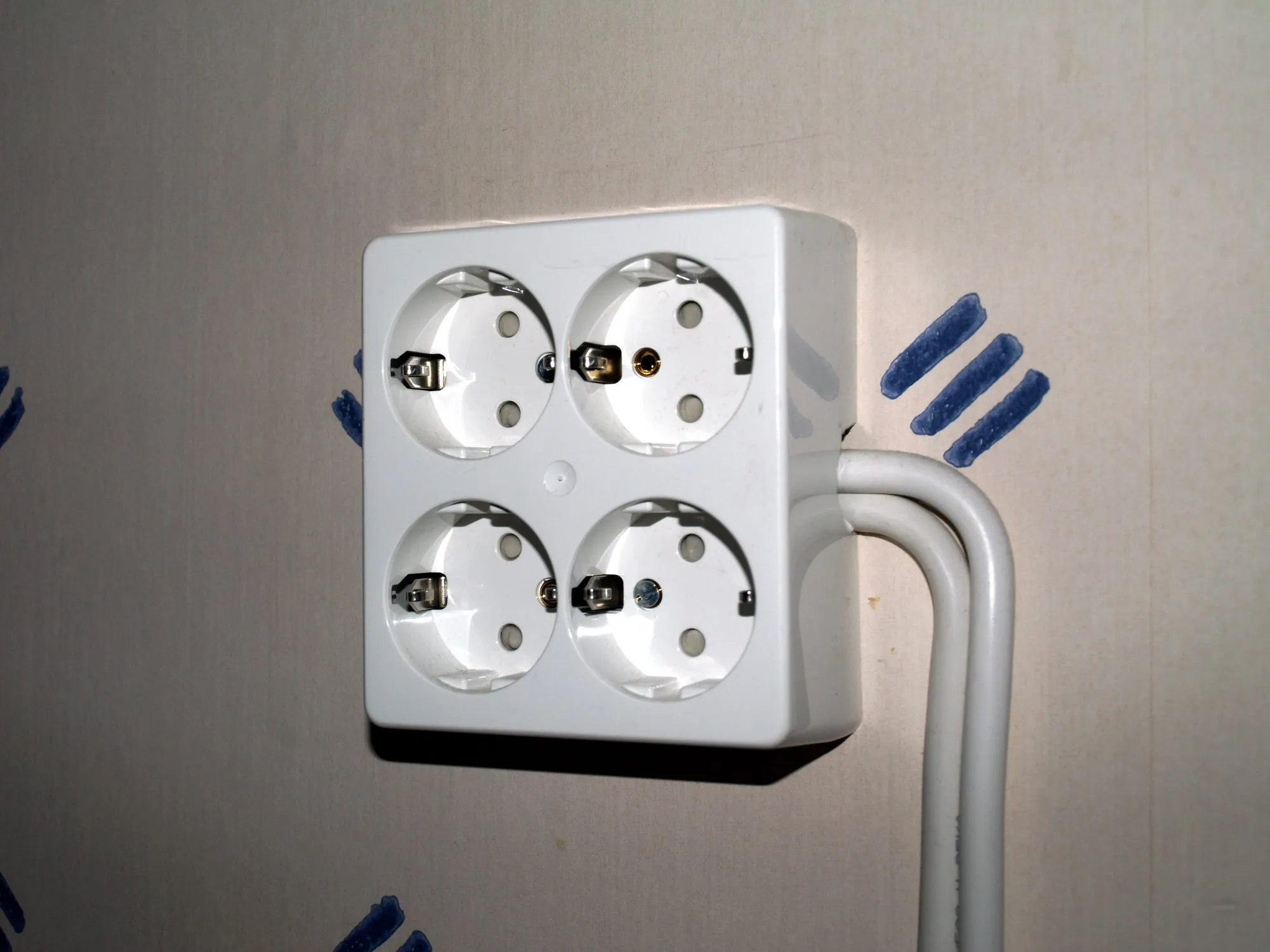
Quick answer: The Korea plug type is the two-round-pin socket (Types C and F), and the power is 220V at 60Hz. If your phone, laptop or camera charger says 100–240V on the label, you only need a cheap plug adapter. A 110V-only hair dryer or straightener needs a voltage converter, or it should stay at home.
Facts below come from Korean law and the Korea Tourism Organization’s own pages, checked on October 18, 2026.
What do Korean outlets look like?
Korean wall outlets take a plug with two round pins, the shape travel adapters sell as Type C or Type F. The Korea Tourism Organization (KTO) describes the standard outlet as having “two round holes.”
Type F sockets have a round recess and metal grounding clips on the sides. A slim two-pin Type C plug fits them as well, so one Europe-style adapter covers everything you’ll plug in.
Useful Korean words when you ask hotel staff or a shop clerk:
| English | Korean | Say it |
|---|---|---|
| Outlet / socket | 콘센트 | kon-sen-teu |
| Plug adapter (slang: “pig nose”) | 돼지코 | dwae-ji-ko |
| Voltage converter / transformer | 변압기 | byeon-ap-gi |
| Power strip | 멀티탭 | meol-ti-taep |
| Dual-voltage (“free volt”) | 프리볼트 | peu-ri-bol-teu |
If you need an adapter, showing 돼지코 on your phone is the fastest way to be understood.
What voltage and frequency does Korea use?
Korea runs on 220V at 60Hz. Korea’s Electric Utility Act Enforcement Rule (전기사업법 시행규칙, Annex 3) sets 220V as a standard voltage, with an allowed range of 22V either way (198–242V), and fixes the frequency at 60Hz ± 0.2Hz.
That ±22V range dates from an October 1, 2025 revision. The earlier tolerance was ±13V. You don’t need to do anything about this; dual-voltage chargers rated 100–240V cover the whole range.
The same rule still lists 110V as a standard voltage, a leftover from history. Korea Electric Power Corporation (KEPCO, 한국전력) began switching homes from 110V to 220V in October 1973. It held the ceremony marking the end of the switch on November 4, 2005, when 17.53 million households were on 220V. Plan on every outlet you meet being 220V.
Do you need an adapter, a converter, or nothing?
Your home country decides the plug shape, and your device’s label decides the voltage. Use this table, then check the label as described in the next section.
| Coming from | Your plug | Your voltage | Plug adapter? | Converter for chargers? |
|---|---|---|---|---|
| USA, Canada | Two flat pins (A/B) | 110–120V, 60Hz | Yes | No, if the label says 100–240V |
| UK, Ireland | Three rectangular pins (G) | 230V, 50Hz | Yes | No |
| Australia, New Zealand | Two or three angled flat pins (I) | About 230V, 50Hz | Yes | No |
| Most of continental Europe | Two round pins (C/E/F) | 230V, 50Hz | Usually not | No |
North America is the group that needs care. A plug adapter changes only the plug shape, not the voltage, so a US or Canadian device that isn’t dual-voltage will get roughly twice the voltage it was built for.
UK, Irish, Australian and New Zealand devices are already built for about 230V, so the voltage is fine. You only need the plug adapter.
How do you read your charger’s label?
Look for the line that starts with INPUT on the charger brick or the device’s rating plate. That line tells you everything in about ten seconds.
- Find the INPUT line (not OUTPUT, which is what goes to your phone).
- If it says 100–240V (or 100V–240V, 110–240V), the device works in Korea with just a plug adapter.
- If it shows only 110V, 120V or 125V, it needs a voltage converter, or leave it at home.
- Check the frequency: 50/60Hz means it works on Korea’s 60Hz.
- If a device from the UK or Australia shows 50Hz only, it is usually something with a motor or a clock. Expect it to run a little differently, or not at all.
Phones, laptops, tablets, cameras, e-readers and electric toothbrush chargers are almost always 100–240V. Check older items and cheap no-brand chargers before you pack them.
Can you use a US hair dryer or straightener in Korea?
Usually not without a converter. Most hair dryers, curling irons and straighteners sold in the US are 110–120V only. Plugged into a 220V outlet with only a plug adapter, they get far more voltage than they were built for and can overheat or be ruined.
You have three options:
- Buy dual-voltage tools. Some travel dryers and flat irons have a 120V/240V switch. Set it to 240V before you plug it in.
- Use a converter. A step-down converter (변압기) must be rated above your appliance’s wattage. Check the watts (W) on your tool’s label and buy a converter rated higher.
- Leave it and borrow. Check your hotel’s amenity list for a hair dryer before you pack yours.
UK and Australian hair tools are already rated for about 230V. They need only the plug adapter.
Where can you get an adapter in Korea?
The KTO says you can borrow or buy one at your hotel’s front desk. You can also buy one at the airport, at retail stores, at major duty-free shops and at convenience stores.
Bringing one from home is still the safer plan. You arrive with a charged phone, which you’ll need for maps, a taxi app and your eSIM or pocket WiFi. If you land without one, ask at your hotel first.
A few tips for shopping in Korea:
- Ask for an adapter that takes a US plug (or UK, or Australian) and fits a Korean outlet. Some adapters in Korean shops go the other way: Daiso, for example, sells one for Koreans taking 220V devices to 110V countries.
- Show 돼지코 and your plug to the clerk so they can match it.
- Bring or buy one power strip (멀티탭) with a Korean plug. Then a single adapter on your own strip, or a Korean strip, charges everything at once.
If you’re heading straight into the city from Incheon, sort your adapter out before you leave the arrivals hall. The ride itself is covered in our Incheon Airport to Seoul guide.
FAQ
What plug type does South Korea use?
Korea uses Type C and Type F plugs, with two round pins. Type F outlets add side grounding clips, but Type C plugs fit them too.
Is Korea 110V or 220V?
Korea is 220V at 60Hz. The national switch of homes from 110V to 220V ended in 2005, so plan on 220V everywhere.
Do I need a voltage converter for Korea from the US?
Only for devices that aren’t dual-voltage. If your charger says 100–240V, a plug adapter is enough. A 110V-only hair dryer or straightener needs a converter.
Can I use my UK plug in Korea?
Not directly. UK three-pin plugs don’t fit Korean outlets, so you need a UK-to-Korea (Type C/F) adapter. The voltage is fine, because UK appliances are built for 230V.
Does Korea use the same plug as Europe?
Mostly yes. Korea uses the same two-round-pin outlets (Type C/F) as much of continental Europe, so most European plugs (Type C and E/F hybrid) fit without an adapter.
Related guides
 Trip Planning
Lost and Found in Seoul: Subway, Taxi, Airport and Police (2026)
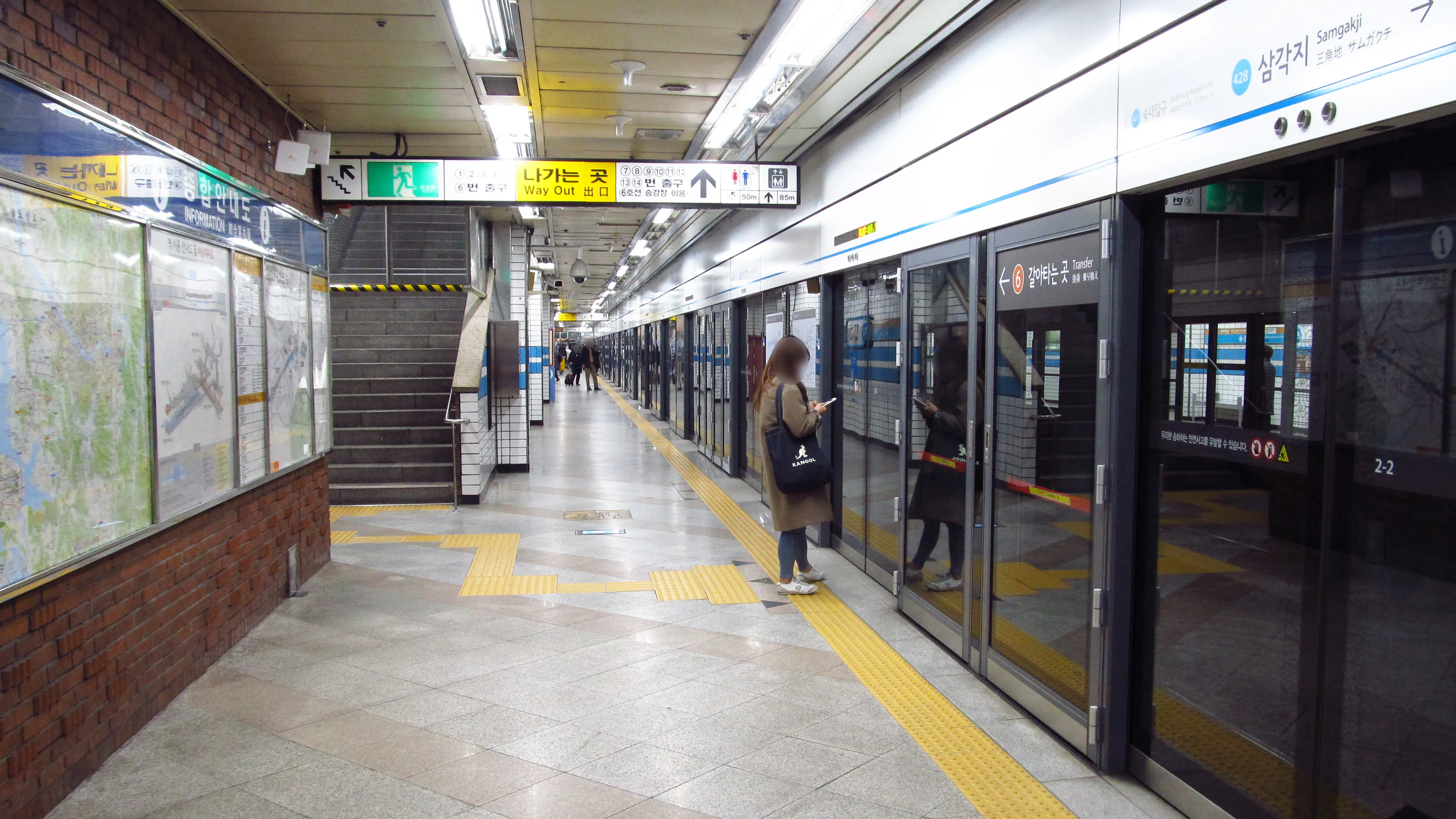
Lost and found in Seoul: tell station staff your train time and door number, check Seoul Metro's four centers, then search found items on Police Minwon24.
 Trip Planning
Doctor in Korea as a Tourist: Clinics, Pharmacies, 119 and 1330 (2026)
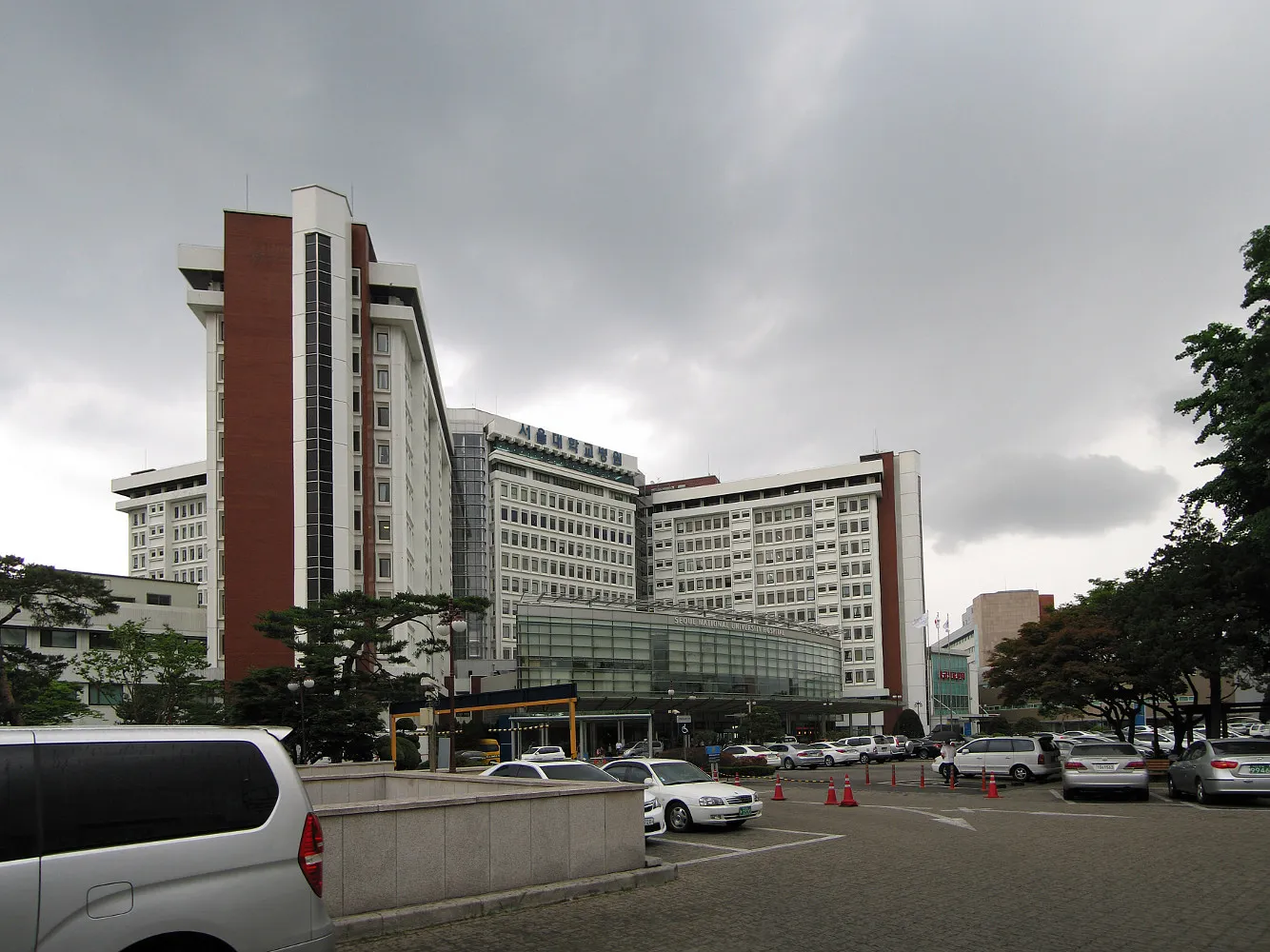
Seeing a doctor in Korea as a tourist: call 119 in emergencies, use a local clinic for minor illness, and expect to pay the full bill without insurance.
 Trip Planning
Korea Weather by Month: Temperatures, Rain and What to Pack (2026)
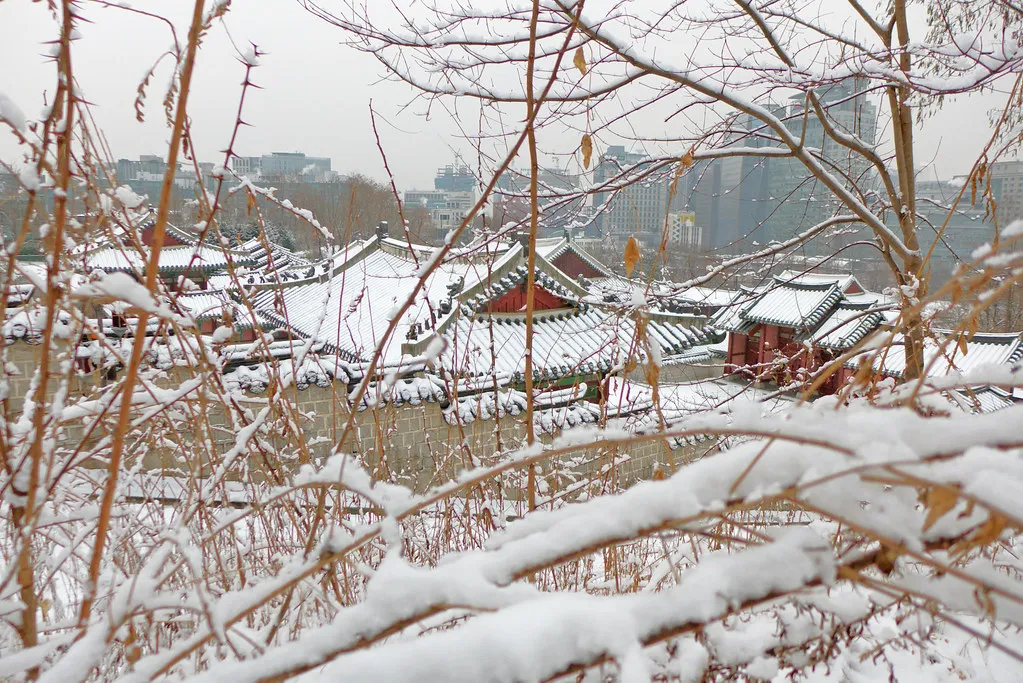
Korea weather by month from official 1991–2020 data: Seoul highs and lows, the July rainy season, dust season and a packing list for each month.
Sources
- Korean law — Electric Utility Act Enforcement Rule, Article 18 and Annex 3: standard voltage, frequency and tolerances (Korean)
- Korea Tourism Organization (VISITKOREA) — Electricity & Communications (English, updated Sep 11, 2026)
- Kyunghyang Shinmun — KEPCO completes 32-year switch from 110V to 220V (Korean, Nov 3, 2005)
- Daiso Mall — 110V travel adapter plug for Koreans going to 110V countries (Korean)
- UK legislation — Electricity Safety, Quality and Continuity Regulations 2002, regulation 27 (230V, 50Hz)
- TÜV Rheinland — Korea draft amendment widening the 220V tolerance from ±13V to ±22V (English)