Korea Weather by Month: Temperatures, Rain and What to Pack (2026)
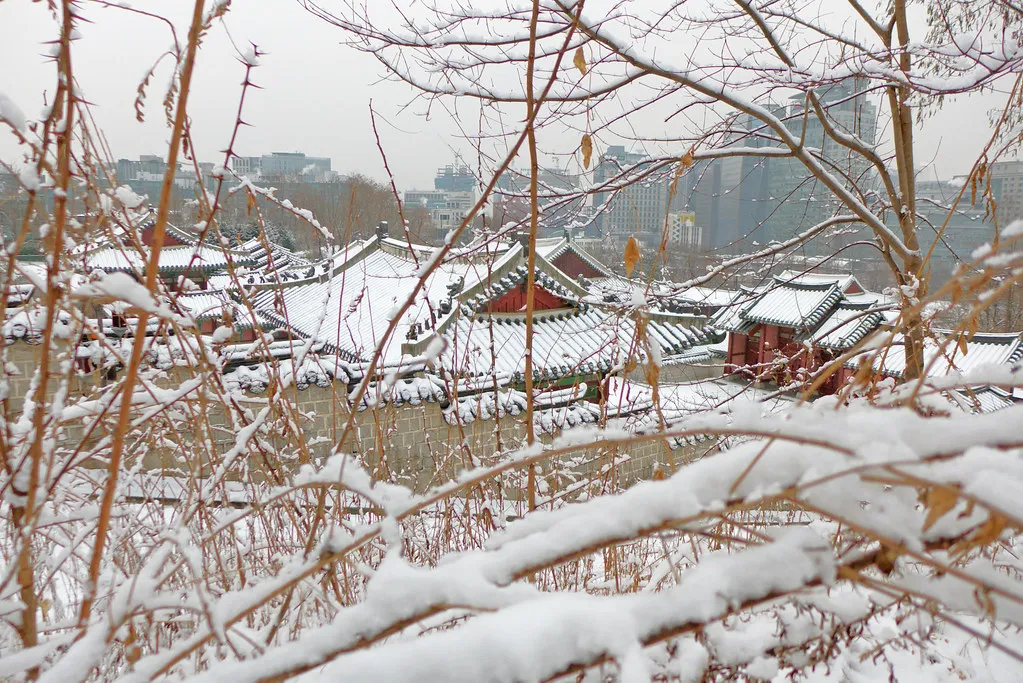
Quick answer: For Korea weather by month, the Korea Meteorological Administration’s 1991–2020 averages put Seoul between −5.5°C (22°F) on January mornings and 30.0°C (86°F) on August afternoons. April–May and September–October are the mildest months to visit, with October the driest of the four. July is the wettest month by far (414 mm in Seoul), and December–March is both the coldest and the dustiest stretch.
All numbers below are official 30-year averages (평년값) from the Korea Meteorological Administration (기상청, KMA) for the Seoul weather station unless another city is named. A single year can run warmer or wetter, so check the forecast a week before you fly.
What is the weather in Korea each month?
Korea has four sharp seasons, and Seoul’s average high swings by 28°C between January and August. The table gives KMA’s 1991–2020 monthly averages for Seoul, plus what to pack.
| Month | Avg high | Avg low | Rain (mm) | Humidity | Pack |
|---|---|---|---|---|---|
| January | 2.1°C / 36°F | −5.5°C / 22°F | 16.8 | 56% | Long padded coat, hat, gloves |
| February | 5.1°C / 41°F | −3.2°C / 26°F | 28.2 | 55% | Winter coat, thermal layer |
| March | 11.0°C / 52°F | 1.9°C / 35°F | 36.9 | 55% | Warm jacket, scarf, KF94 masks |
| April | 17.9°C / 64°F | 8.0°C / 46°F | 72.9 | 55% | Light jacket, layers |
| May | 23.6°C / 74°F | 13.5°C / 56°F | 103.6 | 60% | T-shirts, light cardigan |
| June | 27.6°C / 82°F | 18.7°C / 66°F | 129.5 | 66% | Summer clothes, compact umbrella |
| July | 29.0°C / 84°F | 22.3°C / 72°F | 414.4 | 76% | Rain shoes, quick-dry clothes |
| August | 30.0°C / 86°F | 22.9°C / 73°F | 348.2 | 74% | Breathable clothes, sun hat |
| September | 26.2°C / 79°F | 17.7°C / 64°F | 141.5 | 66% | Summer clothes, umbrella |
| October | 20.2°C / 68°F | 10.6°C / 51°F | 52.2 | 62% | Layers, light jacket |
| November | 11.9°C / 53°F | 3.5°C / 38°F | 51.1 | 60% | Warm jacket, sweater |
| December | 4.2°C / 40°F | −3.4°C / 26°F | 22.6 | 58% | Winter coat, gloves |
Seoul’s yearly average is 12.8°C with 1,417.9 mm of rain. Summer (June–August) brings 892 mm, about 63% of the year’s rain, while winter (December–February) gets only about 5%.
Which month has the best weather in Korea?
April–May and September–October have the most comfortable weather: highs of roughly 18–26°C, moderate rain and lower humidity than summer.
- April: Highs near 18°C, lows near 8°C. Cherry blossoms (벚꽃) usually open in early April; KMA’s normal date for Seoul is 8 April, but in 2026 they opened on 29 March, ten days early.
- May: Highs near 24°C. Rain climbs past 100 mm for the month, still only about a quarter of July’s.
- September: Still summer-warm at 26°C highs, and with 141.5 mm of rain it is wetter than many people expect. Typhoons can still affect Korea (see below).
- October: Highs of 20°C and only 52 mm of rain. KMA’s normal first frost in Seoul is 28 October, so late-October nights get cold.
Pick spring if you want blossoms and can live with dust and windy days. Pick autumn if you want fall colors; October alone gets only 52.2 mm of rain, but September is still wet. If you want to stay near the action in either season, see our guide to Seoul neighborhoods.
What is Korea’s rainy season like?
Korea’s rainy season (장마, jangma) runs from late June to late July, and July averages 414.4 mm of rain in Seoul, more than the six months from November to April combined.
On average (1991–2020), the rainy season in the central region, which includes Seoul, starts around 25 June and ends around 26 July. In 2026, KMA declared it started on 30 June in Jeju and the south and on 1 July in the central region. KMA no longer forecasts start and end dates in advance, so treat the averages as a guide only.
It does not rain every single day of the season. Humidity peaks at 76% in July. August is slightly hotter (30.0°C average high) and still wet at 348.2 mm.
How to handle a July or August trip:
- Pack shoes that can get soaked, or buy cheap rain sandals locally.
- Carry a compact umbrella; convenience stores (편의점) sell them when the rain starts.
- Plan indoor backups (museums, malls, underground shopping) for heavy-rain days. The subway keeps running in rain, so our Seoul subway guide is your best friend in July.
- Check for typhoon alerts in summer and early autumn. Per KMA statistics, an average of 3.4 typhoons a year affect Korea.
How cold does Korea get in winter?
Seoul’s coldest month is January, with an average of −1.9°C, a typical low of −5.5°C (22°F) and a typical high of only 2.1°C (36°F).
Winter is dry: January has the least rain of the year at 16.8 mm, and December–February together get only about 5% of Seoul’s yearly rain. KMA’s normal date for Seoul’s first ice is 3 November and for first snow 20 November.
What to wear:
- A long padded coat (롱패딩) that covers your thighs: average highs stay around 5°C or below from December to February.
- Thermal base layers you can take off indoors, rather than one thick sweater.
- Gloves, a hat and a neck warmer for outdoor sights like palaces and Namsan.
- Lip balm and hand cream. Humidity is around 55–58% in winter.
Pick winter if you want lower crowds, ski trips or Christmas lights and don’t mind the cold.
When is fine dust worst in Korea?
Fine dust (미세먼지) is worst from December to March. Seoul’s city government found that 55 of 66 days above 50 µg/m³ over three years (83%, PM2.5, reported in 2020) fell between December and March, which is why the fine-dust seasonal measures (계절관리제) run during those months.
Korean apps and forecasts show four grades. The table uses Seoul’s daily-average thresholds in micrograms per cubic meter.
| Grade | PM10 (미세먼지) | PM2.5 (초미세먼지) | What to do |
|---|---|---|---|
| Good (좋음) | 0–30 | 0–15 | Nothing special |
| Moderate (보통) | 31–80 | 16–35 | Fine for most people |
| Bad (나쁨) | 81–150 | 36–75 | Wear a KF94 mask outdoors, cut long walks |
| Very bad (매우나쁨) | 151+ | 76+ | Plan indoor days |
When PM10 and PM2.5 grades differ, the higher grade applies. March is also one of Seoul’s windiest months (2.7 m/s average wind, tied with April). KF94 masks are sold at convenience stores and pharmacies.
Is Busan or Jeju warmer than Seoul?
Yes in winter, much less in summer. Busan’s January average low is −0.1°C, about five degrees milder than Seoul, and Jeju’s is 3.7°C. In August all three are hot and humid.
| City (KMA station) | Jan high / low | Jan rain | Aug high / low | Aug rain |
|---|---|---|---|---|
| Seoul (서울) | 2.1°C / −5.5°C | 16.8 mm | 30.0°C / 22.9°C | 348.2 mm |
| Busan (부산) | 8.2°C / −0.1°C | 34.5 mm | 29.5°C / 23.7°C | 266.5 mm |
| Jeju City (제주) | 8.6°C / 3.7°C | 67.5 mm | 30.1°C / 24.8°C | 272.3 mm |
Jeju’s winter is mild but gray and windy: January averages 4.1 m/s wind and only 70.2 hours of sunshine at Jeju City, so pack a windproof jacket. If you’re heading south, see our Busan public transport guide for getting around.
FAQ
What is the best month to visit Korea?
For weather, October is the strongest single month: average highs of 20.2°C in Seoul, only 52 mm of rain and about 206 hours of sunshine. Late April and May are a close second.
Is it too hot to visit Korea in August?
It is hot and humid, with Seoul averaging 30°C highs and 22.9°C lows. It is manageable if you plan outdoor sightseeing for mornings and evenings and use air-conditioned subways, museums and malls at midday.
Does it snow in Seoul?
Yes. KMA’s normal first snow date for Seoul is 20 November, and average highs stay at or below 5.1°C through February. Winter is dry, though, so snowfall totals are small: December–February bring only about 5% of the year’s precipitation.
When does the rainy season start in Korea?
On average around 25 June in the Seoul area, ending around 26 July. In 2026 it started on 1 July in the central region, and KMA says the dates can be adjusted after reanalysis.
What should I pack for Korea in November?
Pack a warm jacket and a sweater. Seoul averages 11.9°C highs and 3.5°C lows in November, and KMA’s normal first-ice date is 3 November, so mornings can be near freezing.
Related guides
 Trip Planning
Lost and Found in Seoul: Subway, Taxi, Airport and Police (2026)
Lost and found in Seoul: tell station staff your train time and door number, check Seoul Metro's four centers, then search found items on Police Minwon24.
 Trip Planning
Doctor in Korea as a Tourist: Clinics, Pharmacies, 119 and 1330 (2026)
Seeing a doctor in Korea as a tourist: call 119 in emergencies, use a local clinic for minor illness, and expect to pay the full bill without insurance.
 Trip Planning
Hanbok Rental in Seoul: Prices and Free Palace Entry Rules (2026)
Hanbok rental in Seoul costs about ₩14,000–24,000 for 4 hours near Gyeongbokgung, and wearing one gets you into the palaces free. Rules and hours inside.
Sources
- Korea Meteorological Administration (KMA) Open Data Portal — Climate normals 1991–2020, monthly, Seoul (108), Busan (159), Jeju (184) (Korean)
- KMA Weather Nuri — Regional climate: Seoul and Gyeonggi (normals 1991–2020, first frost, ice and snow) (Korean)
- KMA press release — Seoul cherry blossoms open on 29 March 2026, normal date 8 April (Korean, 29 Mar 2026)
- Wikitree — KMA declares 2026 rainy season start: south 30 June, central region 1 July (Korean, 1 Jul 2026)
- Wikitree — Rainy season normals by region, 1991–2020 (Korean, 2026)
- YTN — Typhoons affecting Korea: 3.4 per year on average, per KMA statistics (Korean, 31 Aug 2026)
- Seoul Metropolitan Government (Mediahub) — Fine dust grades for PM10 and PM2.5 (Korean, updated Dec 2019)
- Seoul Metropolitan Government (Mediahub) — Fine dust seasonal management, December to March (Korean, Nov 2020)